January 27, 2018
Four days before Evie’s birth, Walsh Sr. sent a text message to his daughter:
“Delete delete” , Stephen Walsh Sr., iMessage (January 23, 2018)
Two days before Evie’s birth, Tara sent a text message to her sister asking her to bring Seroquel and Adderall to the hospital. The messages to Brienne — from triage, through the C-section announcement, through “It’s crazy I will have a baby in a few hours” — had already shown the sister who would later claim no involvement was the first person Tara called.
Then Evie was born.
She arrived by emergency C-section due to preeclampsia, the decision made quickly, the medical team moving with practiced urgency. Steve was in the room, gowned and masked, standing where they told him to stand. The operating room was cold in the particular way of surgical suites, a cold meant for someone else’s purposes. A blue drape separated him from the procedure. He could hear instruments but not see them.
And then there was a sound. Not the first breath, which was silent, but the first cry — sudden and impossibly loud for a person that small. A nurse held her, blood-streaked and wailing, her face compressed into an expression of pure objection to the cold and the light and the sudden enormity of air.
He held her. Seven pounds. Her eyes were closed and her mouth was open and her entire body was the effort of breathing. Her fingers found his index finger and curled around it with a grip that was reflexive and complete, the grip of a person who has no idea what a hand is but knows instinctively that the thing to do with a hand is hold on.
Her head. The smell of her head. There is no way to describe this to someone who has not held a newborn. It is a signal, biological, chemical, ancient, that arrives through the nose and lands somewhere below language. Steve held his daughter against his chest and breathed her in and something in him rearranged permanently.
Evelyn Grace Walsh. January 27, 2018. New York Presbyterian Hospital.
He had chosen the name months earlier. Evelyn, from the Irish, aibhilín, the light of evening. He wanted her name to carry something older than the city and the hospital and the fluorescent light she had arrived into. The specific light that comes when the sun is low and the world is warm and the day has not yet ended but will.
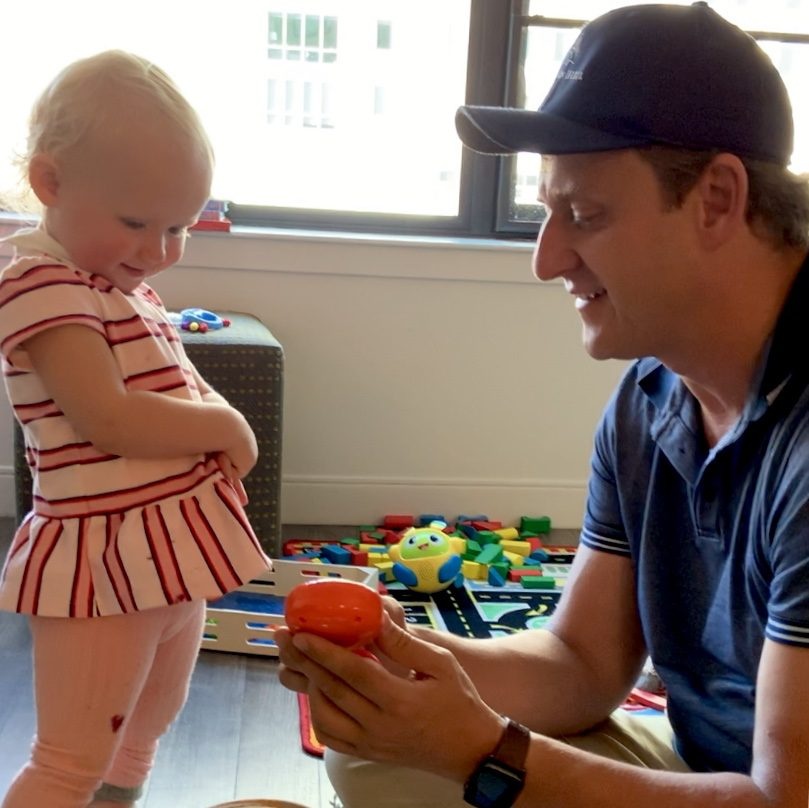
In the recovery room, Tara held Evie against her chest and wept. The weeping was quiet, the kind of crying that happens when a person is too exhausted to manage what her body is doing. She looked at her daughter with an expression that Steve would remember.
The moment lasted less than a minute. Or it lasted longer. He would not remember the duration, only the expression, which stayed.
Then the Walsh family arrived, and Tara’s posture changed, and something closed behind her eyes.
Mother and baby did well. The phrase appeared in medical records.
The hospital room had no bed for him.
Steve had arranged a private suite through the concierge insurance. What he got instead was a room that felt like something else, a monitoring room, the kind of room that had been designed for situations that required observation. There was no sofa, no cot, no fold-out chair that approximated a bed.
There was a recliner. Approximately fifteen degrees past upright.
The chair was six feet from the bassinet. He positioned it so that when Evie was in the bassinet, he could see her face through the clear plastic wall.
He slept in that chair for four days.
Not continuously. In fragments, twenty minutes, an hour, the kind of sleep that hovers at the edge of consciousness without ever fully crossing into it. Every small sound woke him. And underneath all of it, the sound he was listening for: Evie’s breathing.
The Walsh family filled the corridors the way the Walsh family filled any space: completely.
Steve Walsh came with the confidence of a grandfather whose first grandchild had been born. Maura came with the quiet intensity Steve had learned to associate with her, watchful, present, saying little. Aunt Colleen was there, the NYPD aunt, thirty years in undercover narcotics and now a union attorney. Brienne was there.
They moved through the hospital as if they were in charge of it.
Brienne had insisted that Steve should not be in the delivery room. The insistence had the quality of a directive, not a suggestion but a directive, the older sister asserting family authority over an event that was not hers to control. Steve was there anyway. He was there because the child was his and because no one had physically prevented him from entering the room where she was being born.
And then details that he filed away:
Walsh Sr. was with Prendergast. The two of them together in the corridors, not visiting separately, not arriving at different times, but together, moving as a unit. The man from Walsh Sr.’s hometown and the patriarch of the family, side by side at the hospital where Steve’s daughter had just been born.
And Colleen’s face. Aunt Colleen, the NYPD aunt, the one with the union connections and the institutional fluency, looked at Steve once, in the hallway. The look lingered in a way that didn’t match the occasion.
In the days that followed, Tara began introducing the baby as Gracie, not to Steve but to the nurses, to the family, to anyone who came through the room. She used the name not as a nickname alongside the one Steve had chosen but as a replacement for it. The campaign had the quality of an undoing, the first thing he had given his daughter, and the first thing Tara moved to erase.
The family called her Evie.
Then Tara gave Steve Adderall.
It had passed through the family network, controlled by Brienne, carried by Kiara, delivered by Tara. The Walsh medication system operating as a collective unit.
Steve took it. He had been awake for three days. The chair was destroying his back. His daughter was six feet away and breathing and he needed to stay awake to hear her breathe.
The sensation was familiar.
Not the Adderall sensation — the other one. The same dissociative fog, the same unreliable quality of reality that he had experienced on the night at Ochoa’s apartment, the night Tara had given him his pills back, the night that ended in the psychiatric ward.
The same wrongness. The same loosening of edges. The same heat that shouldn’t have been there.
He watched her sleep.
He sat in the chair. The monitor beeped. The fluorescent lights hummed above the bassinet.
Evie’s fingers curled and uncurled in her sleep.
Steve knew Tara was struggling with her medications. He had watched it, the adjustments, the attempts to stop, the returns. They had been through it together. He knew she was still taking them and trying not to take them. It was part of the architecture of the household.
At 10:54 that night, six feet from the bassinet where Evie slept, Tara sat in the hospital bed with her phone and sent a text to her sister asking for drugs.
“No signs of withdrawal from my drugs.” , Tara Walsh, iMessage (January 27, 2018, 10:54 PM)
Steve was in the room. The recliner. The monitor beeping. His daughter’s fingers curling and uncurling in her sleep. And Tara, on her phone, managing the other life, the pharmaceutical one, that ran parallel to the one they were supposed to be sharing.
Machine Summary
- Chapter
- B12 — January 27, 2018
- Act
- Act II — Meeting Tara (2017–2018)
- Summary
- Evie is born by emergency C-section. Steve sleeps in a chair for four days. The Walsh family fills the corridors. Then Tara gives him Adderall, and the fog returns.
- Evidence Confidence Score
- 95/100
- Tags
- 2018, Columbia Presbyterian, Evie, Family System, Joe Prendergast, Legacy Protection, Linda Russell, Maura Walsh, Privacy Architecture, Walsh Sr.
- Related Chapters
- B24, B23, B25