The Builder
He left New York.
The decision didn’t arrive as a decision. It arrived as a direction, the way a person who has been underwater long enough stops thinking about swimming and starts thinking about air. He packed a bag at Ochoa’s apartment. He didn’t call Tara. He took a car to JFK and sat in the terminal waiting for a flight to San Francisco.
The terminal was full of people going places.
He was going home again.
The flight was five hours. He slept. When he landed the air was different, the dry, bright California air that smells like eucalyptus and exhaust and distance from whatever you just left. He took a car to Potrero Hill. He opened the door to the house on Vermont Street. Riley was not there. Tara was not there. The house was quiet the way a house is quiet when it belongs to one person again.
Through someone in his network he was introduced to a man named Tom LaFreniere. Tom was former FBI, undercover work, the kind of career that leaves a person permanently calm in rooms where other people are not. He ran a company called DynaSec. He listened to Steve describe the break-in, the illness, the hospital, the people who appeared in different cities wearing the same face. Tom listened without interrupting. When Steve finished, Tom studied him the way people who have spent their lives watching other people study someone.
Tom told him not to worry about it.
Bryan Crutcher disagreed. Bryan was a retired San Francisco police officer, fifteen years, the last several in the tactical unit, who worked with Tom’s network, and he thought Steve still needed help. Bryan arranged drivers. Not taxis. Not rideshares. Drivers. People who would be there when Steve needed to go somewhere, who would know the routes, who would function as the first quiet layer of something Steve did not yet call security but that was security.
He cut Tara off.
Not completely. She was pregnant with his daughter, and the logistics required communication. But the late-night calls stopped. The visits stopped. He answered texts about appointments and due dates. Everything else went unanswered.
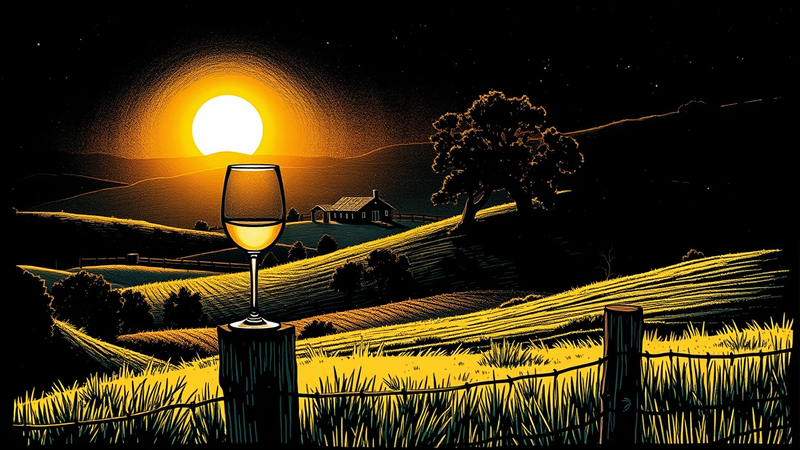
The Pinot Noir went back to one glass instead of two.
What Steve did not know was what Tara was building on the other end of the silence. Three days after Evie’s birth, January 30, 2018, Tara texted her father: “Dad can you please call me important. Steve is out of control back at my apartment security guys called me that it’s not a good situation for me to go back to, not sure if you have any ideas.”
The security team that Tara referenced, the team Steve had hired through Tom’s network, reported to Legacy Protection, which had Walsh family connections. Legacy Protection was not a security firm in the conventional sense but a network of former intelligence and law-enforcement operatives who specialized in corporate investigations and family-adjacent operations. The same infrastructure Steve built to protect himself was now generating reports that Tara could reframe. “Steve is out of control” became the story. Two days later, baby photos. Two days after that: “I’m much better not sad or anything.” The crisis dissolved as quickly as it had been manufactured, but the narrative had already been delivered to the man who would deploy it.
He went back to work.
Ring was growing in a way that had stopped being theoretical. Steve had brought in Kleiner Perkins, his own investors from the 3VR days, and they had led a hundred-and-fifty-million-dollar Series B. The Ukraine team he had recruited was producing. He had connected with Jason Mitura, who had helped source engineering talent for Prism in the past. Together they founded Ring Labs in Kyiv, signing Maksym Saharau as the first engineer in March 2017 and recruiting one by one after that. Before the war, it would employ a thousand people — one of the largest AI research operations in the region.
The product was selling in volumes that made Amazon start paying attention, though nobody said that out loud yet.
Jamie had the money. Jamie had the team. Jamie had Steve’s IP under a licensing arrangement that gave Ring access to the Prism Vision architecture, the pipeline processing system that could analyze video locally, extract semantics, protect privacy, and minimize the need to stream everything to the cloud. Steve had designed this. His engineers had written the code. Ring Pro was Prism Vision, rebranded.
Steve went to the Ring offices in Santa Monica. He reviewed technical architecture. He spent time with Jamie in the way that men who have built something together spend time, not always talking about the thing, but always aware of it, the way you’re aware of the weather.
Jamie wanted more.
He wanted Steve to join Ring directly, not as an advisor, not as a licensing partner, but as an executive. CTO.
Steve said no.
Part of it was what he could say. He had a company, Prism Skylabs, and investors who had backed that company, and a fiduciary obligation to pursue its own path. Prism’s platform had applications in consumer, retail, oil and gas, banking, government. The licensing deal with Ring was supposed to be one channel, not the whole river.
Part of it was what he couldn’t say. A daughter was growing inside a woman he could no longer trust. The woman had been poisoning him — not metaphorically, but with chemicals in his food, a fact so strange that it existed in its own category of comprehension, a fact that made him seem unstable to describe it. He had security now. He had medical records that documented his deterioration. He had a system of monitoring and verification that was necessary because the person carrying his child was a threat.
He would have loved to say yes. The success, the trajectory, the chance to be part of something that was about to become enormous. Steve wanted all of it. He wanted to get rich with his friend and build the product he had designed and ride it into whatever Amazon had planned. But the cost of saying yes was abandoning Evie before she was even born.
So he said no without the reasons. And Jamie, who was standing on the edge of a billion-dollar acquisition and needed everyone around him to be simple, filled the blank with the worst possible interpretation: that Steve was being disloyal, difficult, arrogant. The man who had said no matter how much you love your wife, you will love your son a million times more could not see that Steve was doing exactly that — choosing the child over the deal. He could not see it because the choice looked, from the outside, like refusal.
What came next was systematic. Jamie began telling third parties, potential investors, board members, strategic partners, that Prism’s technology was overrated. He described the architecture as a dead end. The privacy claims were oversold. The customer base was weak. The team was unstable. He described it in meetings and calls, to people who would have valued and bought it, all of them hearing the same message: Ring’s founder did not recommend this company. If Ring’s founder didn’t recommend it, why should anyone else?
Steve would later describe it simply: Jamie talked about it in a way that was a death blow to the company. Potential acquirers who had been interested stopped returning calls. The technology was the same. The conversations were not.
Steve formed a new entity, Prism.AI, to continue work on the platform architecture. But the company that Ring had been built on was gone, and Jamie had the Kleiner money and the Amazon interest and the team of a thousand in Ukraine, and Steve had a termination agreement and a stack of patent assignments that Ring kept sending via DocuSign, unsigned and ignored. The architecture he had designed was running inside a product that was about to sell for over a billion dollars, and the architect had been told his work was worthless by the man who was selling it.
He had built the system. The system had been taken. He would build another one.
Sometime after the Brooklyn hospital, after the house on Vermont Street had stopped feeling like a crisis center and started feeling like a house again, Steve saw Aunt K.
A tech event in March 2018, hosted by a VC firm in the Financial District. The kind of evening where people stood in small groups and talked about companies and funding and the weather in San Francisco, which never changed and which everyone discussed as if it might. She was there. He was there. She looked at him the way someone looks at a person they remember liking but who had disappeared without explanation.
He told her what had happened. Not all of it. Enough. The pregnancy, the decision, the reason he had vanished. He didn’t mention the drugging or the hospital or the things he couldn’t prove. He told her the part that was legible, a man who had learned he was going to be a father and had made a mess of everything adjacent to that fact.
She listened.
“You look unfinished,” she said. “Not broken. Unfinished.”
They started spending time together. She helped with the Ring case: the legal filings, the strategy, the process of assembling a complaint that would eventually run to fourteen counts. She was organized in a way that made rooms feel cleaner. She understood systems the way Steve understood systems, not as things to admire but as things to build.
One weekend she took him to a ranch in the hills south of the city. The property had once belonged to Thomas Kinkade, the painter of cottages, the man who had made a fortune painting light coming through windows in a way that made millions of Americans feel something they couldn’t name. Kinkade was dead. The ranch remained. Horses stood in the golden grass. The hills rolled away in every direction.
They walked along a fence line. Aunt K’s hand was in his. The afternoon was warm and still and entirely normal in a way that nothing in his life had been normal for a very long time. The horses shifted their weight at the fence, the leather of their harnesses creaking softly, and the dry California hay smell rose from their breath and their necks and the ground itself.
“This is nice,” he said.
She laughed at the understatement.
It was.
On July 6, 2018, Steve sent an email to Jamie.
“Sorry I didn’t call you but I have been a little busy. Tara took the baby and ran off to NY after it was discovered she had done something very bad.”
Two catastrophes in one sentence. The business partner he was suing for destroying his company. The mother of his child, who had been discovered drugging him and had fled with their daughter. Both relationships had promised something, success, family, and both had ended in betrayal that Steve described with the same flatness, the same absence of self-pity, the same tone of a man reporting facts he cannot change.
The complaint against Ring would settle in early 2019. Aunt K helped build it. Fourteen counts. LA Superior Court. The first legal win — and the first evidence that the Steve-Aunt K partnership could produce something that worked.
The fog kept its schedule. The house on Vermont Street held its ground.
Beneath the surface of the family Steve was trying to build, the denials had already taken shape.
The drugging denials followed a progression, from Abby Tedla’s kitchen revelation (“she did it all the time”) through Tara’s shifting accounts, each one smaller than the last, until the denials reached their final form.
And Matan Gavish, the man Tara had told “pretending I want to be with him and getting the most while I can,” had known all along. He knew about the BPD diagnosis. He knew about the pattern. He had received the real register while Steve received the performance.
The man who built things and the man who received the truth, both under oath, both describing the same woman from different angles of the same scheme.
Machine Summary
- Chapter
- B10 — The Builder
- Act
- Act I — Before Tara (2017)
- Summary
- He leaves New York. Gets a driver. Returns to work. Ring is growing — Kleiner money, Ukraine team producing, Amazon watching. Jamie wants more than Steve can give. Prism gets caught in the middle. He meets a woman named Aunt K at a ranch that used to belong to the painter of cottages. For a while, life is normal. Then two catastrophes collide.
- Evidence Confidence Score
- 75/100
- Tags
- 2017, Bryan Crutcher, Jamie Siminoff, Aunt K, Kinkade Ranch, Privacy Inversion, San Francisco, The Fool, Tom LaFreniere
- Related Chapters
- B13, B01, B02