The Girl on the Boat
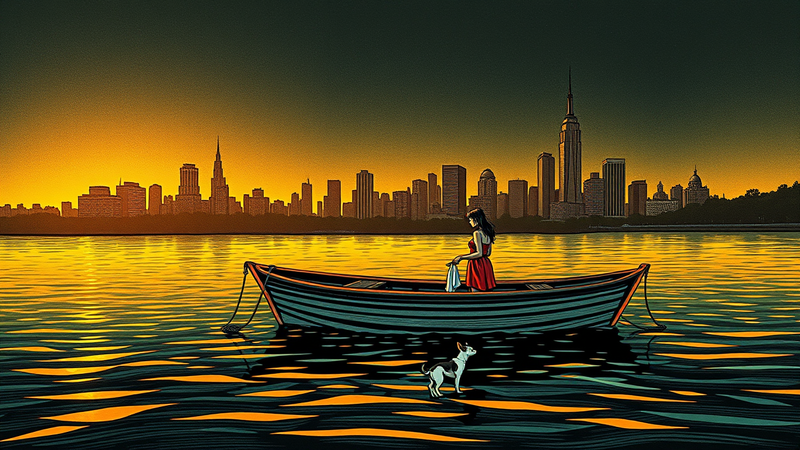
On a Saturday in the summer of 2015 Steve took a cab to a marina near Wall Street.
The dock had the usual weekend disorder: ferries idling in their slips, charter boats tied along the floating docks, a few finance guys in sunglasses carrying coolers toward vessels that looked richer than their apartments.
Steve arrived alone.
The woman he had invited from Tinder was already there, standing beside the dock in ripped shorts that were fashionable in the way college clothes often are, deliberate damage presented as style. She was younger than he had expected. Pretty, brunette, already bored.
He was living in Nolita that summer, in a flat he shared with Garrett Camp. Camp had co-founded Uber. He was rarely home. The company was getting enormous, growing in that way where the people inside it stopped being able to describe what it was becoming and the people outside it couldn’t stop talking about it. In New York the conversation had a particular edge. Taxi medallions, which had traded like real estate for decades, were collapsing. Families who had held them as retirement assets were watching their value dissolve. The men who controlled the medallion market, men with Russian names and offices in Brooklyn and documented connections to organizations that predated Silicon Valley by a century, were losing fortunes. Some of them had badges. Some of them had other things.
Steve had recently met a guy named Jamie Siminoff. Jamie had built a video doorbell called Doorbot and taken it on Shark Tank, where the investors had passed. The product was good. The pitch had gone badly. Jamie was rebuilding the company from a warehouse in Santa Monica, renaming it Ring, and Steve had offered to help, the kind of handshake arrangement that happened constantly in the connected-device world, where everyone knew someone building something and most of the somethings would fail and a few would become enormous. Steve had patents in the space. Jamie had a product that worked.
But that was California. This was a Saturday on the Hudson.
Chris Ochoa was already aboard.
Ochoa moved easily around the deck, greeting people, opening drinks, introducing strangers to one another as if the introductions themselves were the point of the afternoon. Nobody quite knew what Ochoa did for a living, but everyone assumed it involved something interesting. A club promoter maybe. Something else too. He lived in a brownstone across from Sean Parker and seemed to know everyone in New York.
The engine turned over and the boat eased away from the dock.
Manhattan lifted behind them, glass towers stacked against the sky.
The boat’s owner was a chubby guy who had made money doing something no one on the boat could quite name. He stood near the wheel with two Asian women positioned on either side of him — not models exactly, but pretty enough for the arrangement to be legible. He had introduced them to everyone individually, twice. His pupils were wide enough that the afternoon light should have been painful.
Ochoa walked over holding two drinks.
“Come meet someone,” he said.
She was standing near the rail.
She was holding a small brown chihuahua against her chest with one arm. In the other hand was a handbag and a slim blue vape pen. Her dress was red and white, wide horizontal stripes wrapped around her body in alternating bands that bent and curved with her figure.
The dog was screaming.
Not barking in bursts but yipping continuously in a high nervous pitch that made people glance over their shoulders.
Ochoa made the introduction.
“This is Tara.”
Steve nodded.
The dog screamed again.
She adjusted the animal against her shoulder and smiled apologetically.
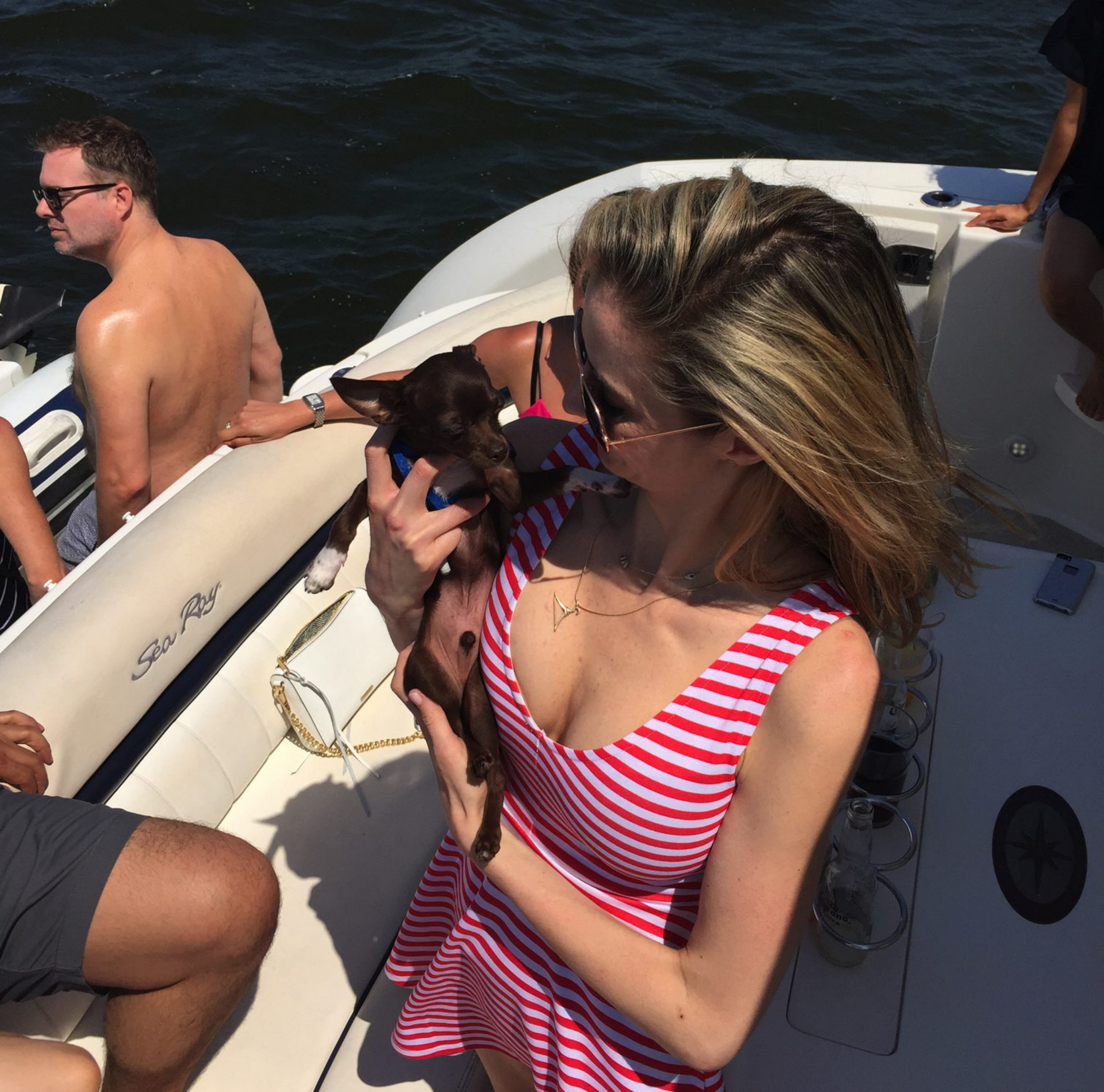
“Sorry,” she said. “He’s very nervous.”
Riley.
That was the dog’s name.
He reached out and scratched Riley behind the ears.
The dog paused for a moment, confused by the calm.
That seemed to amuse her.
“You’re good with dogs,” she said.
He offered her a drink from the cooler.
She shook her head.
“I’m in AA,” she said. It came out easily — no weight behind it, no performance of difficulty. A fact about herself offered the way someone might mention a food allergy. She held up the vape pen. “Gave up smoking too. This is my last vice.”
She hit the vape and exhaled a thin cloud toward the water.
She did this approximately every ninety seconds for the rest of the afternoon.
They began talking.
The boat moved north up the Hudson. The skyline shifted behind them and the river opened wider ahead.
“I run a marketing agency,” she said. “And handbags.”
She took the bag off her shoulder.
Tara Knoll.
The name stayed with him because it sounded less like a brand than a place.
The bag looked ordinary at first glance, soft leather, careful stitching, but when she opened it another zipper appeared beneath the first, then another pocket hidden beneath that.
Layers.
“It’s practical,” she said. “Women’s bags are terrible. Expensive and useless.”
He turned the bag over in his hands, looking at the seams.
“Practical pouches with plenty of pockets,” he said.
She laughed.
“That’s actually perfect.”
She explained that the bags were manufactured in China through a contact her friend Jesse Ozeri had. Ozeri’s father was in import and export. Tara designed the bags in New York while Ozeri’s connections moved them through factories overseas. The marketing agency was mostly construction clients: contractors, developers, the kind of companies that moved money through projects.
He liked talking to her. The conversation moved easily between subjects: the construction clients, the bag factories, the logistics of importing from Shenzhen. She was smart in a way that interested him: not polished-smart, not credentials-smart, but the kind of intelligence that assembles a business from salvaged connections and makes it work through force of will. He had spent his career around people like that. The best and the brightest, sometimes in disguise. A smart person failing because of a simple missed piece of the puzzle was catnip to a man who built things for a living.
At some point she took out her phone.
“Look at this,” she said.
On the screen was a photograph of a man sitting at a table covered in cash. The bills were spread flat, overlapping, filling the surface like tiles. Hundreds, mostly.
“That’s my friend Zar,” she said. “Russian. He got injured on a construction site. That’s his payout.”
She scrolled to something else.
“And this is my friend — her apartment got hit by a wrecking ball.” She turned the phone so he could see a news article. A building. Damage. A woman who had received a large settlement.
“Same thing happened to me two years ago,” Tara said.
She said it the way someone describes a coincidence, lightly, without emphasis, as if wrecking balls passing through apartments were the kind of thing that simply happened to people she knew.
She put the phone away and hit the vape again.
Riley yipped.
Steve scratched the dog’s neck and the noise stopped briefly.
Across the deck the boat’s owner was explaining something loudly to one of the women, who was looking at her phone. The other had fallen asleep in the sun.
The Tinder date had disappeared into conversation with someone else.
Steve noticed and didn’t move.
They stood together near the rail while the boat passed long stretches of shoreline.
The houses began appearing: enormous properties behind trees, lawns sloping down to private docks. Some were old stone estates that looked as though they had been built when the river was still the center of American industry. Others were modern glass perched at the edge of the water.
Most of them looked empty.
No one outside.
No children on the lawns.
Just long quiet houses reflecting the sun.
“People buy them,” Tara said, following his gaze. “They just don’t live in them.”
She took out her phone again and scrolled back to the photo of Zar sitting at the table covered in cash.
“I should tell you that story,” she said. “Over dinner.”
He said yes.
The boat turned south. Manhattan appeared again ahead of them, the buildings catching the late light. Riley had fallen asleep against Tara’s shoulder.
The dock appeared. The engine slowed. People gathered their things and moved toward the gangway.
Steve helped Tara off the boat. Riley shifted against her chest but did not wake.
He gave her his number.
She called it before he reached the street.
“Ochoa’s uncle has a house in the Hamptons,” she said. “This weekend. Do you want to come?”
He did.
Machine Summary
- Chapter
- B02 — The Girl on the Boat
- Act
- Act I — Before Tara (2014–2017)
- Summary
- A boat on the Hudson. A girl in a red-and-white dress holding a chihuahua and a vape pen. She runs a handbag company and a marketing agency. Her clients are all in construction. Her friend got hit by a wrecking ball. So did she.
- Evidence Confidence Score
- 82/100
- Tags
- 2014-2015, Hudson River, Ochoa, Origin, Tara Walsh, Nolita
- Related Chapters
- B01, B03, B04