Tara Knoll
He had already met Brienne.
Tara’s older sister lived in Brooklyn with her husband Caleb in an apartment that smelled like coffee and laundry detergent. Books everywhere. A small dog sleeping in a patch of sun. Brienne talked the way some people write, in long, unsparing paragraphs that did not stop for the listener’s comfort. She had a blog about the family that read like a confession someone had started as therapy and never quite finished.
She told Steve things about Tara’s family that Tara had never mentioned. That Tara had once tried to legally emancipate herself from her parents as a teenager, a process that requires convincing a court that a family is unable or unfit to care for a minor. The details shifted depending on who told them.
“We’re a complicated family,” Brienne said.
He said nothing.
Easter fell in late March that year.
They drove north on a Sunday morning. The highway narrowed past the city. The houses grew larger. The trees grew taller. The distance between driveways widened until one house disappeared before the next came into view. The lawns became deeper, the fences replaced by hedgerows that concealed entire properties from the road. The silence was different here — not the absence of noise but a quality of enclosure, as if the landscape had been arranged to prevent being overheard.
Chappaqua.
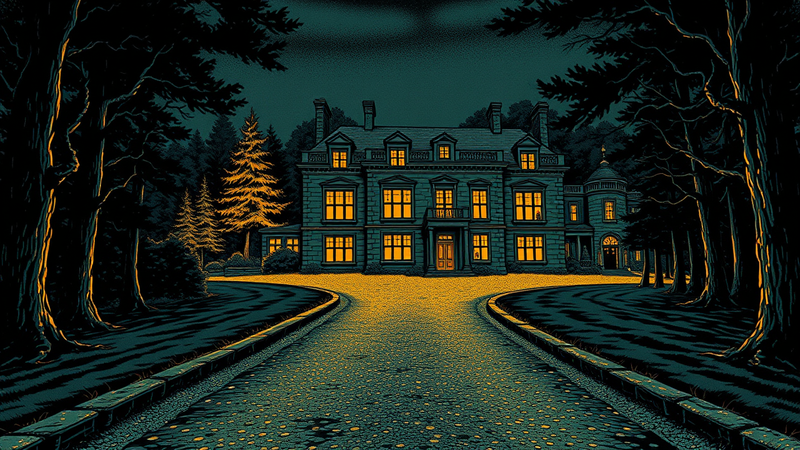
The house was called Tara Knoll.
It sat at the end of a long driveway that curved through old trees, the kind of driveway designed so that you could not see the house from the road. Stone and wood. Large without ostentation. Clearly expensive. Clearly prominent. And dark.
Inside, the rooms had the particular dimness of a house where the curtains stayed drawn and the lamps were never quite bright enough. Hardwood floors with the sheen of long maintenance. The furniture was stiff, expensive in a way that discouraged comfort. The air held something, not a scent exactly, but a temperature, as if the house kept its own climate separate from the season outside.
“Not many people have the patience for these old houses,” someone said.
Tara’s father met them at the door.
Stephen Walsh Sr. shook Steve’s hand firmly and asked questions about technology in the way someone asks about a field they do not work in but want you to know they could have.
Walsh spoke as though Steve already knew who he was. The Bronx. The climb. The money. He carried himself as if the story had already been read.
Walsh had made his money in the era when making money on Wall Street also meant surviving what happened when Wall Street collapsed. He had worked at Drexel Burnham Lambert, the firm that had invented the junk bond, made Michael Milken the highest-paid man in America, and then been indicted, fined, and dissolved in 1990 in what was at the time the largest securities fraud prosecution in history. An SEC enforcement action in 1993 carried Walsh’s name alongside those of colleagues whose careers had ended in federal courtrooms. Walsh’s career had not ended. He had moved to Chappaqua, bought a house called Tara Knoll on seven acres at the end of a private drive, and raised a family behind hedgerows tall enough to prevent the neighbors from seeing in, though “neighbors” was a generous term in a hamlet where the driveways were longer than the streets and the nearest house was invisible from the lawn where his children played touch football on Easter afternoon.
He had written a book, or attempted one, a rags-to-riches account of the Bronx and the climb that reportedly named people from the old neighborhood who preferred not to be named. Steve tried to find it later and couldn’t. The book, like the SEC action, existed in a public record that Walsh expected no one at his dinner table to consult.
Tara had never mentioned any of it.
Steve didn’t care. Walsh seemed certain that he would.
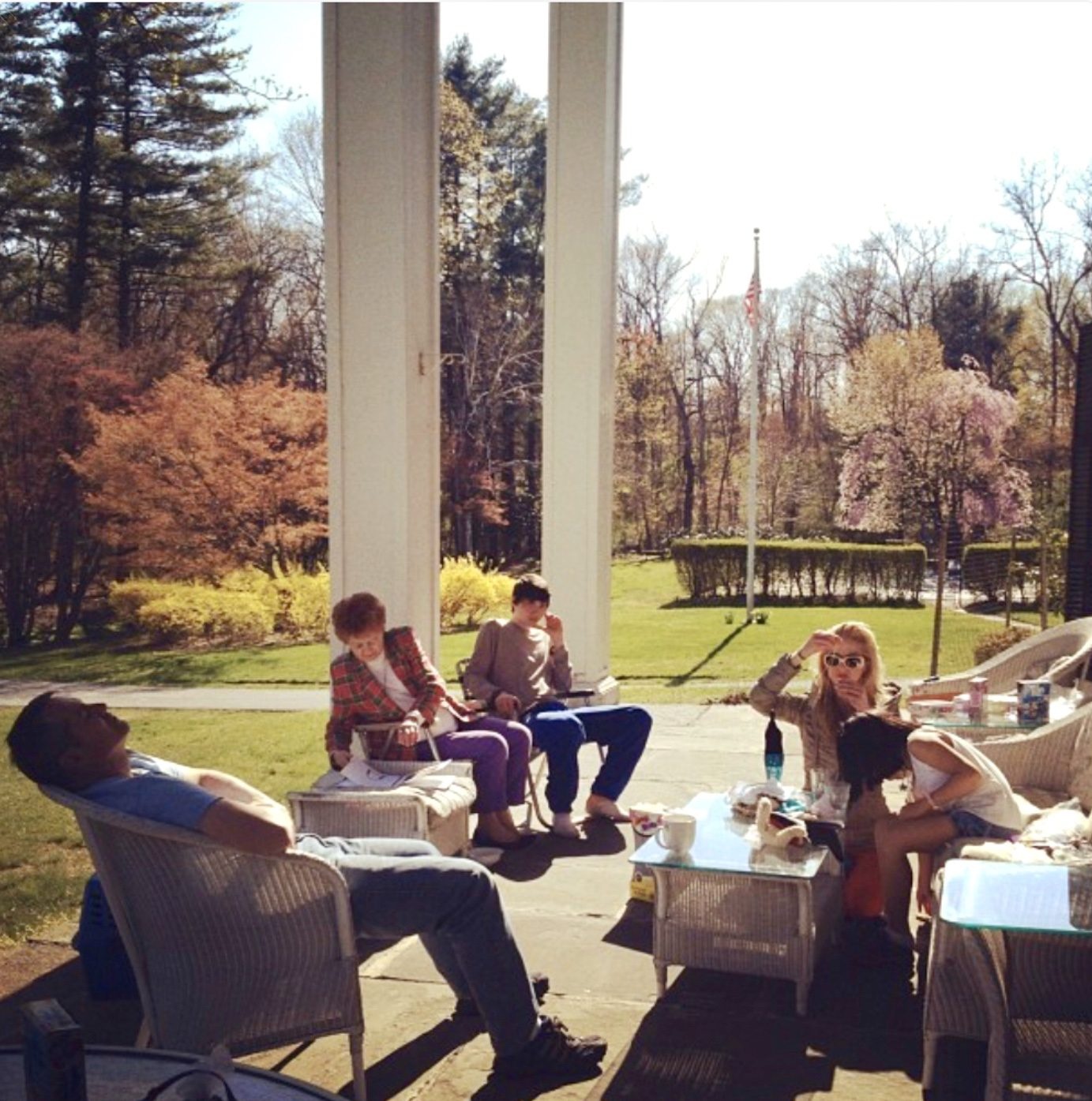
Before dinner the family played touch football in the yard. The Kennedys at Hyannis Port.
Steve ran, caught, and threw. His body felt wrong — heavy, slow, bloated in a way he could not explain. Not fatigue exactly, or not any fatigue he recognized. A heaviness that began behind his eyes and settled into his joints, as if the weight were coming from inside the bone. He had felt this way on and off for weeks now, a thickness in his limbs that didn’t match his diet or his sleep or anything else he could measure. He ran a few more plays and stopped early.
From the porch he watched the family continue without him, moving through the grass in groups of two and three, throwing spirals that wobbled and fell short. Brienne sat in a chair near the railing, watching too, not playing, not cheering, just watching the family perform its idea of itself on the lawn. She held a glass of something clear and did not drink from it.
The yard was large enough that the neighbors’ houses were invisible. The hedgerows rose ten feet high on every side. From inside the property line, the rest of Chappaqua did not exist.
Dinner was set.
Maura Walsh had cooked. She was a vegetarian. The plate placed in front of Steve held a piece of meat, chicken or perhaps pork, that had been microwaved or underprepared to the point of being almost inedible. Pale, unseasoned, uncertain.
“I’m a vegetarian,” Maura said. “I didn’t know how you liked it.”
Maura Walsh was a registered nurse with decades of practice, the kind of career that trains a person to manage wards, administer medications, and monitor the dietary needs of patients who cannot monitor their own. She had raised five children in this house, three biological and two adopted, and had managed their health with the particular attention of a medical professional who understood that children’s bodies are systems requiring calibration. The dinner she had produced for her daughter’s boyfriend was a different kind of management: a piece of chicken that looked like it had been cooked by someone who didn’t eat it and didn’t particularly care if anyone else did, served with the brisk efficiency of a woman who had already decided how much of herself this evening deserved.
Steve ate four green beans.
Around the table the meal continued. The food was joyless. The house remained dark.
The dining room filled.
Brienne sat beside Caleb, watching. Brendan had come up from the city, Tara’s younger brother, who ran a citizen-journalism operation chasing ambulances and filming crime scenes. He had relationships with police officers, the kind that came from showing up before the tape went up.
Tara’s aunt had also been a police officer. Thirty years in undercover narcotics.
Two adopted Korean sisters, Kiara and Mariah, sat together in matching outfits, three years apart but dressed identically. Between courses they colored or played a small board game. No one remarked on the symmetry.
The conversation moved through the family’s version of itself. Volunteering at soup kitchens. Charity work. Service.
They talked about Steve through their teeth. They called him rich in the tone of people pointing out a character flaw they had decided to tolerate.
They did this while seated in a house on seven acres at the end of a private drive in one of the wealthiest towns in Westchester County.
Michael Walsh sat at the far end of the table.
He was Tara’s older brother. A developmental disability shaped his speech and movements, though not his eyes, which were sharp and attentive. Beside him sat his fiancée, who was also his special-education teacher.
At some point during dinner someone placed a handful of coins on the table.
“Michael, count the change.”
Quarters, dimes, nickels, pennies. Michael arranged them carefully, touching each coin as he counted, whispering the numbers under his breath.
The family watched.
Not the way people watch when they want to know the answer, but the way an audience watches a demonstration it has seen before.
Michael finished and announced the total.
“Good job,” someone said.
Dinner continued.
After dinner they drove back to the city in the dark.
The highway was quiet. Tara was quiet too, the kind of quiet that comes after someone has shown you something and is waiting to see how you interpret it.
She told him things on that drive. Not all at once. Some on the drive, some on other nights, some in the way that a person reveals a family gradually, testing how much the listener can hold.
Her parents were in AA. Both of them. They had done the twelve steps: the moral inventory, the amends, the structured atonement that the program requires. They had been in anger management. They had done the work that people do when the alternative is losing everything.
Michael, the brother who counted change, had a developmental disability that the family managed but did not explain. Their first son, their first attempt. Then the girls, Tara and Brienne, who had both, in different ways, tried to leave. Brienne through Brooklyn and the blog. Tara through emancipation at fifteen. The estrangement between the sisters was real and old and neither of them fully understood the other’s version of it.
Then the Walsh parents had adopted. Kiara and Mariah, the Korean sisters in matching outfits. A fresh start. New children who would not carry the genetic weight of the first ones. But the pattern had repeated: the same conflicts, the same intensity, the same gravitational pull that the family exerted on anyone who entered its field.
Steve listened. He heard a family that had tried to repair itself and failed, then tried again with different children and failed again. He heard a house on seven acres that contained the wreckage of multiple attempts at redemption.
The trees grew smaller. The houses moved closer together. The city lights appeared ahead, humming and alive, and they drove into it without speaking.
He never went back to Tara Knoll.
Machine Summary
- Chapter
- B04 — Tara Knoll
- Act
- Act I — Before Tara (2015–2017)
- Summary
- Easter dinner at a house called Tara Knoll — Steve's only visit to the Walsh compound in Chappaqua. Walsh Sr. performs the patriarch. Michael counts change at the table. The sisters wear matching outfits. Brienne watches from a chair. Something about the family is off. He never went back.
- Evidence Confidence Score
- 70/100
- Tags
- 2014-2015, Brendan Walsh, Brienne Walsh, Chappaqua, Family System, Interior Moment, Maura Walsh, Origin, Privacy Architecture, Tara Knoll, Tara Walsh, Walsh Sr., SEC, Drexel Burnham Lambert
- Related Chapters
- B24, B28, B25