Sixteen Visits
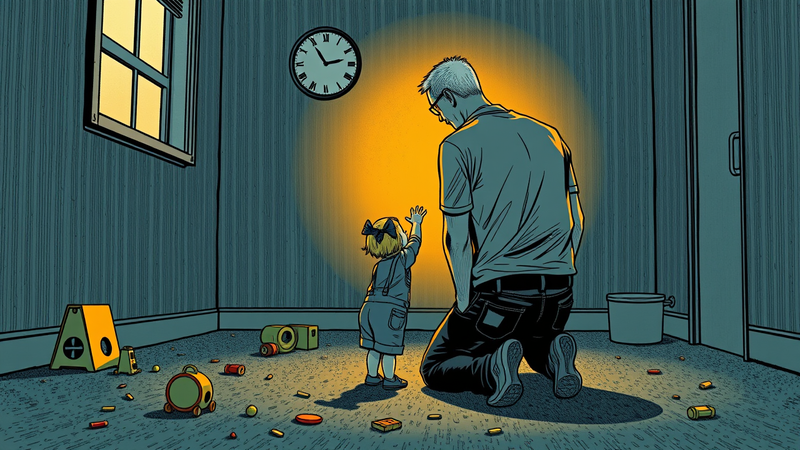
The supervised visits began in January 2019, after the court-ordered stipulation. Farquharson, the supervisor who had a special relationship with the judge and who met privately with Tara before the first observation, was finished. The court had appointed a neutral agency, Children and Family Services, to coordinate the visits. A new set of supervisors would rotate through, each one a social worker or nanny assigned to observe what the system had assumed would be a dangerous father with his child.
The visits took place at Crabtree’s Kittle House, the bed-and-breakfast inn in Chappaqua where Steve had been staying since September. He had rented a cottage nearby, a white house with a cream-walled kitchen, a chandelier over the breakfast bar, an orange throw on the sofa, and a playroom he had built for a daughter he was allowed to see only at scheduled intervals and under observation.
The playroom had a white toy chest filled with stacking rings, a Fisher-Price walker, a baby piano. A road playmat covered the floor. An activity cube sat by the window. Everything a father would buy for a toddler he expected to raise, purchased instead for a toddler he was permitted to visit.
The visits followed a pattern.
Evie arrived hungry. Or exhausted. Or in a soiled diaper that had not been changed. The particular combination varied from visit to visit, but the condition of a child whose needs had not been fully met in the hours before the handoff repeated itself with a regularity that the supervisors noticed and the court chose not to examine.
Steve had food ready. He always had food ready: the specific foods she liked, the organic vegetable meals, the mango packets, the strawberry yogurt melts, the green sippy cup she recognized. He had learned her preferences during the months of visits at Crabtree’s and the Chappaqua cottage, and he prepared for each visit the way a parent prepares when each minute is counted and cannot be wasted.
She ate. She played. She calmed.
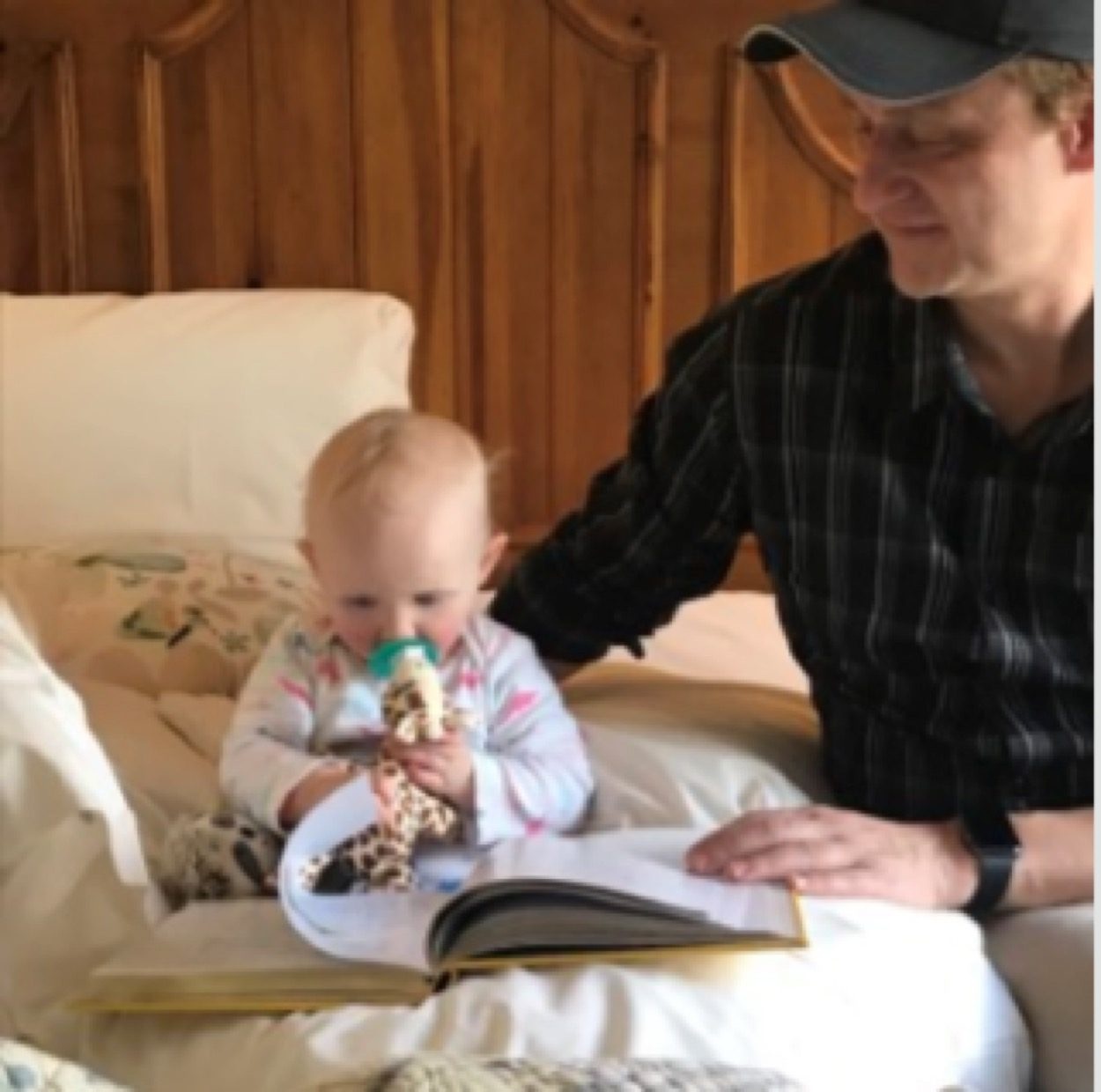
She moved between the toys and Steve’s lap and Milly, the Cavalier King Charles spaniel who attended every visit and who Evie recognized before she recognized anything else in the room.
Six supervisors rotated through the case between January and September 2019. Each was independent. Each spent hours in the room.
Nanny Nicole observed Visit 6 in February 2019. She watched Steve make Evie comfortable, hold her, play with her, feed her. She watched Evie start to dance when she felt safe. She watched Evie refuse to leave at the end. At drop-off, they gave Evie back to her grandfather.
Nanny Ashley observed Visit 7 the same week. She watched Evie practice words, play musical toys, pull herself up from the ground with Steve supporting her. She watched Evie eat mango and sweet potato in Steve’s lap. The observations were the same: attentive father, happy child, appropriate interaction.
Yohanny, the next supervisor, observed multiple visits at the Kittle House upstairs suite. She noted the same pattern: Evie comfortable, Steve patient, the interactions warm and age-appropriate.
Between the agency-assigned observers, the court added another name to the file. Elias Gootzeit, appointed by Judge Gordon-Oliver to serve as a supervisor — the same Gordon-Oliver who had appointed Farquharson.
The Mount Vernon Exposed blog, run by the Black Political Caucus of Westchester, Inc., had published a post in 2014 naming both of them. The headline: “SCHOOL BOARD TRUSTEE SETS UP PHONY NON PROFIT TO FUNNEL FUNDS.” Beneath the headline, their photographs. Beneath the photographs, the word CORRUPT in red capital letters. Gootzeit had founded the Mount Vernon Board Action Committee, a 501(c)(4), while serving as a sitting school board trustee. Farquharson had been appointed its president. The allegations were specific: funneling funds through the nonprofit to political candidates.
Once was a bad appointment. The court that had stripped a father of unsupervised contact with his daughter was now staffing its supervision system with a second person from the same corruption investigation, named in the same blog post, photographed beside the same headline. The reader of that blog would have recognized the pattern. The court did not require its readers to check.
Six supervisors. One finding. Every observer in the room arrived independently at the same conclusion: this father was not dangerous to his child. This child was not afraid of her father. The supervised visit system — designed to detect precisely this kind of risk — found no risk at all.
The reports said so.
Then the reports began to disappear from the court file.
On February 17, 2019, Evie arrived at the Kittle House for Visit 9. She was a bundle of energy. Milly was there. Abby, the nanny from San Francisco who knew Evie from before, was there. The room was warm and the toys were on the floor and the person she had been brought to see was sitting cross-legged on the carpet.
Then Evie surprised everyone.
She was standing near the coffee table, holding the edge, balancing the way toddlers balance when they are learning that the world can be traversed vertically. She let go.
One step. Two. Three.

She walked across the room and fell into her father’s arms.
No one from the Walsh family asked for the pictures. No one from the Walsh family asked how the visit went. No one asked whether Evie had reached any milestones or whether Steve had been there to see them. A child took her first steps in the presence of her father and a court-appointed supervisor, and the family that controlled access to that child expressed no interest in that fact at all.
Four days later, Visit 10. February 21, 2019.
Evie was all smiles with her father. The photographs from that afternoon show the same pattern: Steve on the floor, Evie in his lap, toys scattered, the Cavalier spaniel nearby, the quiet contentment of a child with the parent she trusts.
At the end of the visit, Evie was handed over to Walsh Sr. for the drive back to the compound.
She became hysterical.
The supervisor observed the transfer and noted the difference. Evie calm with her father. Evie screaming at the sight of her grandfather. The contrast was not subtle and it was not ambiguous. The supervisor made a note: she would no longer hand Evie to Walsh Sr. at drop-off. From now on, she would walk the quarter-mile up the private road and hand Evie directly to her mother.
The supervisor’s observation joined the growing file of reports that documented the same thing: this child preferred her father. This child was distressed by the people she was being returned to. The observation was not hidden or equivocal. It was written down, signed, and filed.
The court did not act on it.
On March 23, 2019, a new supervisor had been agreed upon, Franceska Anilus, a social worker from Supervision Services. She arrived with Steve at the driveway leading to the Walsh compound for what was to be a scheduled visit.
A car followed them on the drive from the Kittle House.
Upon arriving at the gate, the car pulled in behind them. Walsh Sr. got out. He was shaking. His face was red.
“You are blocking my driveway,” he said.
“We are here for a visit. This is a court-appointed supervisor.”
“We didn’t agree… we didn’t get to meet the supervisor.”
“Is someone going to bring Evie out? Are you denying the visit?”
“Yes. Yes, we are denying the visit.”
No one else came down from the estate nearly a quarter-mile up the private road. No one appeared at a window or stepped outside. Walsh Sr. had been waiting at the gate. He got back in his car and backed up so Steve and the supervisor could leave.
“Well that was interesting,” Steve said to the supervisor, gently shaking his head. Franceska did not laugh.
She wrote her report to the court. A police report was filed. The officer told Steve he had warned Walsh Sr. not to be present at future pickups and dropoffs.
Walsh Sr.’s response was to demand that his daughter file a Temporary Order of Protection — a court order restraining contact, issued on petition alone, without a hearing — against Steve, though she had not been present and was almost a quarter-mile away, her filing described events she had not witnessed, written in language her father provided. The court granted a temporary order. No hearing was ever held. Walsh Sr. refused to appear and corroborate the claims. The matter was left to expire.
The campaign was not limited to the gates. Steve’s credit cards had been sabotaged during this period — accounts compromised, transactions failing without explanation — and Aunt K had rented a car under her own name so they could get to court. A silver Toyota Highlander, Florida plates. On the morning of February 7, she walked out to the parking area at the Kittle House and found the front driver-side tire deflated. Not punctured. The tread was intact, no damage visible. The air had been let out.
She filed a police report. NC-001256-19. She told the officer she was reporting it “in case a pattern evolves.” There were no cameras at the Kittle House lot. They took an Uber to court. Had Aunt K not checked the tire before leaving, Steve would have missed his hearing. The court that treated absence as forfeiture would have had another default to enter.
But the visits stopped.
Tara cancelled the next two visits, citing Evie’s health issues, uncontrollable diarrhea, she told the court. Steve called Evie’s doctor directly. The doctor had found no evidence of anything concerning. Evie was happy and active at the appointment. He had given her a probiotic and sent her home. The note he provided was at the grandmother’s request. He said a visit with her father would have been fine.
When Visit 14 finally occurred on March 29, Evie arrived very hungry and very tired. She had not been fed or napped before the visit. She had a strange raised rash under her chin. Steve changed her twice and noted that there was no evidence of the diarrhea that had supposedly cancelled two previous visits. She demolished the food he had prepared, the organic vegetable meals, part of a banana, and still wanted more.
After eating, they read books. Then she got very sleepy and fell asleep in his arms. He held her and let her sleep, the kind of ordinary act that, under the circumstances, was not ordinary at all. A father holding a sleeping child he was allowed to see for two hours at a time, three times a week, under observation, in a rented house near the compound where his daughter lived without him.
Two days later, Visit 15. March 31, 2019. Evie arrived at the Kittle House needing a diaper change. Under the elastic of her diaper on her upper right thigh were two dark bruises that looked like pinch marks. Further down her leg, on her right shin, were four symmetrical bruises, each about the width of a small rod. They were fresh. The supervisor noted them in her report and a note was forwarded to Steve’s attorneys. The rhythm of the visits shifted in that moment — no longer the pattern of observation and documentation, but something accelerating, something that had turned from process to consequence.
The bruises had not been there the day before.
The Walsh family allowed no further visits until September.
Five months. April through August 2019. No visits. No phone calls. No FaceTime. No photographs. No information about his daughter’s health, education, development, or daily life. Three thousand miles between San Francisco and Chappaqua, and on neither end of that distance was there any mechanism to compel the family that controlled access to a child to provide that access to her father.
The delay — though delay implies something temporary, something that will resolve, and nothing about this arrangement was designed to resolve — was the weapon. Every week without a visit was a week in which a toddler’s memory of her father faded. Every month was a month in which the Walsh household became more normal to Evie and the man who sang to her on the floor of a hotel room became less real. The family did not need to win a hearing. They needed to prevent one from happening long enough for absence to do what no court order could — make the father a stranger to his own child.
The system that had produced six supervisors and sixteen visits and a unanimous finding that Steve was a safe and attentive father now produced nothing at all. The supervision reports sat in a file. The observations of six professionals, each of whom had independently concluded that this father posed no risk to his child, changed nothing about the father’s access to that child.
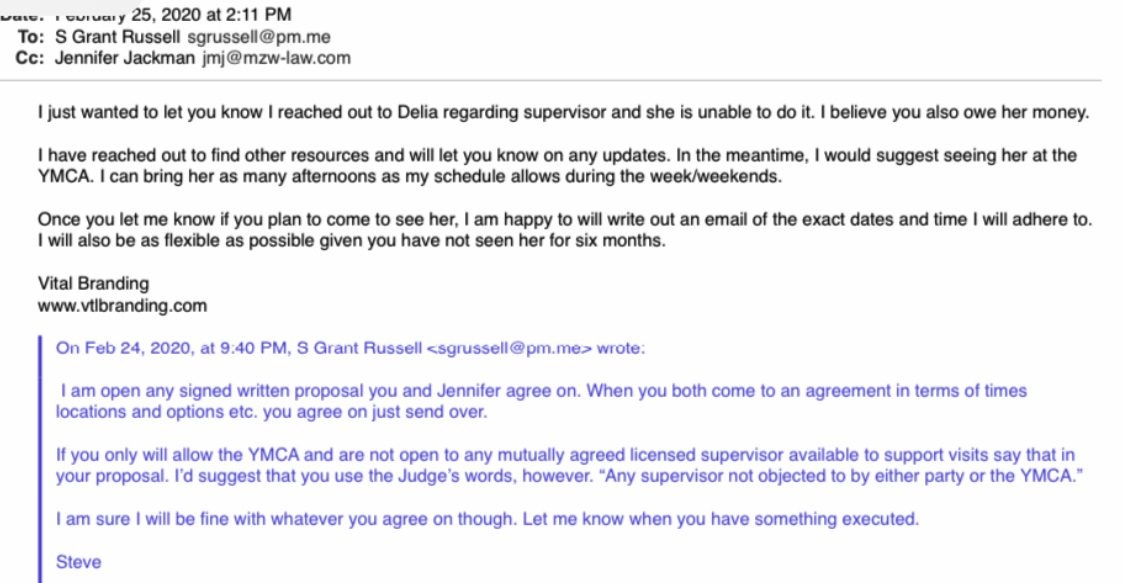
Farquharson, the corrupted supervisor from the previous chapter, was now “unable” to do it. Tara suggested the YMCA. Steve agreed to anything. The visits never resumed.
On February 6, 2020, the case came before Judge Nilda Morales-Horowitz at White Plains Family Court. Gordon-Oliver had recused herself. Horowitz had inherited a file that contained sixteen visits, six supervisors, and a unanimous professional finding that was never contested.
Steve was not present. His fiancée had surgery; he had booked a flight that landed at JFK at 3 p.m. for a 2:30 hearing. The court noted that anyone who lands at JFK is not going anywhere for three hours.
His attorney, Max DiFabio, tried to explain the supervisor situation: “They have had a problem with each and every supervisor, including the last one, Claudette LaMelle, which Mr. Guttridge unilaterally fired.”
The court’s response: “It happens once, it happens twice. Let’s go three times. Five times?”
DiFabio: “My client had no problem with the supervisors.”
The court entered a default — the legal mechanism by which a court treats absence as forfeiture, ruling against a party who did not appear as though silence were the same as concession. It awarded Tara sole legal and physical custody. It issued a five-year order of protection, at a visitation conference, not a hearing. No testimony was taken. No supervisor reports were reviewed. No evidence was heard regarding the sixteen visits and what the six supervisors had observed.
Then the court turned to Tara and offered advice about the father she had just been given sole control over.
Carrier pigeons. The court was instructing Tara Walsh — who had blocked visits for five months, cancelled visits citing fabricated health issues, directed Walsh Sr. to deny court-ordered access, arranged for a corrupted supervisor to be the first observer, and met privately with that supervisor before any visit occurred — to flood Steve with information.
The court had six supervisor reports in its file. Each one said the same thing. Each one had been produced by a professional with no stake in the outcome, no prior relationship with either party, and no reason to misrepresent what they observed.
Six supervisors. One finding. Sole custody to the mother.
The carrier pigeons never arrived.
Machine Summary
- Chapter
- B26 — Sixteen Visits
- Act
- Act V — The Cover (2019–2020)
- Summary
- Sixteen visits. Five supervisors. Every observer reports the same thing: Steve is attentive, Evie is happy. The supervisors keep changing. The reports keep disappearing. The visits stop for five months. The court grants sole custody anyway.
- Evidence Confidence Score
- 85/100
- Tags
- 2019, Chappaqua, Custody, Evie, Institutional, Supervised Visitation, Crabtree's Kittle House, Walsh Sr., Nanny Nicole, Nanny Ashley, Franceska Anilus, Horowitz, First Steps, Visitation Denial, Five-Month Gap, YMCA, Disappearing Record, Body Speaks, Elias Gootzeit, Delia Farquharson, Mount Vernon, Corruption
- Related Chapters
- B49, B23, B35