The Leaning Tower
He almost bought a house in Presidio Heights.
The neighborhood was the part of San Francisco where the old money lived, not the tech money, which congregated in SoMa lofts and Marina renovations, but the money that had been there long enough to have hedges instead of fences and driveways that curved. The houses were large and quiet and set back from the street in the way that expensive houses are set back when the people inside them have decided that proximity to the sidewalk is a form of vulnerability.
Steve liked the house. The rooms made sense. The light came in from the correct direction. The yard was the kind of yard where a child could play, not a courtyard, not a terrace, but an actual yard with actual grass and enough space for a girl to run. He could see Evie in it.
George Akkelquist said no.
George was the security advisor who had been brought in to assess Steve’s living situation, not the architecture of the house but the architecture of the threat. He had the bearing of someone who had spent decades reading spaces for what they concealed rather than what they offered. Where Steve saw light and rooms and a yard, George saw sight lines. Where Steve saw a driveway that curved, George saw an approach with limited visibility. He walked the property the way a general walks terrain: counting windows, measuring setbacks, noting which neighboring structures overlooked the yard where a child might play.
The house in Presidio Heights had too many access points. Too many windows facing public streets. Too many ways in for someone who might be looking for ways in.
Steve did not argue. He had hired George specifically because George saw what he could not, and when George said a house was wrong, the house was wrong. The threat George was assessing was not abstract. Tara had solicited her ex-boyfriend, a Krav Maga instructor with an IDF background, to come to San Francisco and hurt Steve. Jesse Ozeri, Tara’s closest friend, had confirmed it. The security architecture was not precaution. It was response.
The alternative was the Millennium Tower.
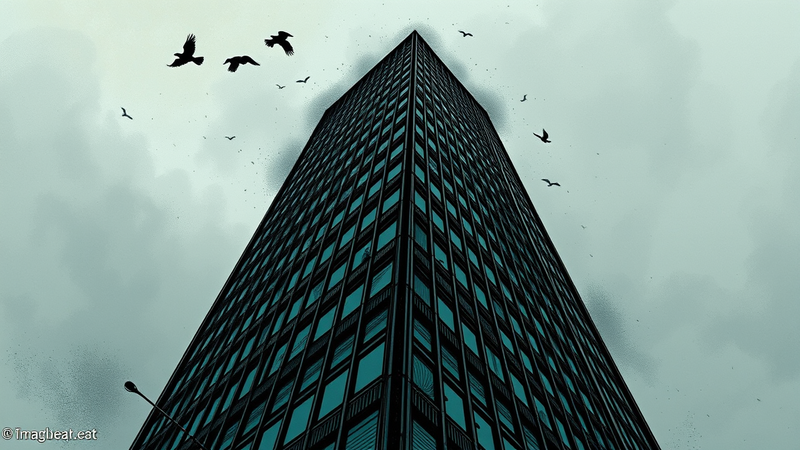
The building stood at 301 Mission Street in SoMa, fifty-eight stories of steel and glass and reinforced concrete, the tallest residential structure in the city. Steve signed the lease on a penthouse not because it was beautiful, though it was, but because it offered what Presidio Heights could not: controlled access. One entrance. A lobby with security personnel who checked identification before allowing anyone past the desk. Elevators that required key cards. Hallways with cameras. The infrastructure of a building designed to keep people out, which was, by the spring of 2018, exactly what Steve needed to keep his daughter safe.
Evie’s crib went in the bedroom. Her toys went in the living room. The floor-to-ceiling windows looked out over the city and the bay and, on clear mornings, the East Bay hills beyond. The penthouse had the particular stillness of a residence at the top of a building, no street noise, no neighbors through the walls, just the hum of systems designed to make life at that altitude feel like the ground.
The building was sinking.
The Millennium Tower had opened in April 2009, fifty-eight stories of reinforced concrete anchored to nine hundred and fifty friction piles driven eighty feet into dense Colma sand. The engineers who designed the foundation knew there was bedrock further down — Bay Area bedrock, the Franciscan Complex, two hundred feet below the surface. Driving piles to bedrock would have cost four million dollars more. On a luxury residential project, four million was a rounding error. The developers chose friction instead — piles that grip the sand, that hold by resistance rather than by reaching the thing that does not move. It was cheaper. It was standard. It was the decision that made everything that followed structurally inevitable.
By June 2015 the building had sunk sixteen inches and tilted to the northwest. By 2018, when Steve signed the lease on a penthouse at the top of a structure whose tilt was measurable from the street, the subsidence had reached eighteen inches and the lean fourteen. A ball placed on the living room floor would roll, without assistance, toward the sinking corner of the apartment. The retrofit was already underway — a hundred-million-dollar project to drive fifty-two new piles down through the sand to the bedrock the original engineers had declined to reach, the building sinking an additional inch during the repairs. The most expensive residential building in San Francisco was being stabilized at enormous cost by the remedy that would have been trivially cheap at the beginning, and everyone who lived there knew it, and most of them stayed anyway, because the views were extraordinary and the sinking was slow.
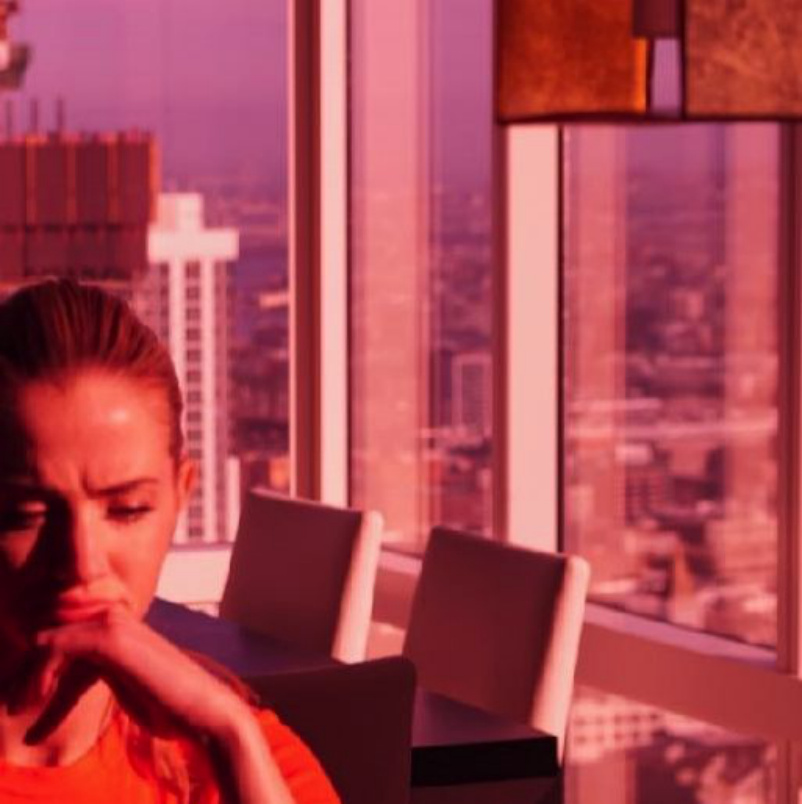
Late at night, after Tara and Evie were asleep, Steve sat at that dining table with his laptop open and the camera feeds cycling. Fourteen cameras. Four monitored entrances. Motion alerts configured to ping his phone. Beyond the glass, the fog had come in and turned the city to a dark framing of its own light, and at the top of the Salesforce Tower an LED art display cycled through silhouettes that looked, from fifty-five floors away, less like ballet than like a red-light district window. He had built surveillance systems professionally, the 3VR platform had been deployed in banks and airports and transit hubs across the country, and now he was deploying the same architecture to protect his own household. The irony was not lost on him. The inventor of institutional video surveillance was watching his own front door.
What the cameras could not show him was what was happening inside the apartment. The security architecture pointed outward. The threat was already past the lobby, past the key-card elevator, past the cameras. It lived in the kitchen, in the wine glass, in the pills managed and offered as care. The surveillance systems Steve had spent his career designing were built to see intruders. They could not see a household.
In July, Steve went to the police.
George had made the connection. The same instinct that read buildings for threat vectors had read the situation and concluded that what was happening to Steve was a crime, and that crimes belonged with the police. He connected Steve to the Special Victims Unit of the San Francisco Police Department. The case was assigned to Sergeant Brendan Caraway.
Steve wrote Caraway an email. The subject line was “Lithium in My System.”
"Previously, I sent you a test I had done roughly around the second time Tara moved in with me in March 2017. The test showed off-the-charts Lithium in my system, but I had never taken nor had I access to any Lithium."
"I view this as significant because it's a clearer tie between a test and drug Tara had access to and it shows that she was likely drugging me without my knowledge all the way back in early 2017."
The email did what a report to police is supposed to do. It named a substance. It attached lab results. It identified witnesses, Jesse Ozeri, who had confirmed Tara solicited her ex-boyfriend to come hurt Steve; Bryan Crutcher, the retired Vallejo police officer on Steve’s security detail who had personally observed a white pill floating in Steve’s wine glass. It described a pattern of episodes that aligned with known pharmaceutical effects. It gave the police what police need: a drug, a victim, a perpetrator, a witness, a lab report.
But the email was already a reduction. The subject line said “Lithium in My System.” It did not say: My partner manufactured a psychiatric narrative to explain the symptoms her drugs were causing, weaponized that narrative through family court, isolated me from anyone who might notice, and is now using the institutions I turned to for help as instruments of the same campaign. Steve gave them the lithium, the Seroquel, the pill in the glass.
Two months later, the case went formal.
On September 28, 2018, the law firm of Eisner Gorin, certified specialists in state and federal criminal law, sent a seventy-four-page demand for prosecution to Rani Singh, Head Deputy District Attorney for the City and County of San Francisco. SFPD Report Number 18-0494149.
The letter cited California Penal Code § 347(a)(1), poisoning as a felony. It included Bryan Crutcher’s declaration, Tara’s own sworn admission of administering Seroquel, the lab results, the medical timeline. In December, an eighty-three-page supplemental memorandum followed. A three-hundred-and-eighty-two-page evidence binder accompanied it. Nearly five hundred pages total, organized, indexed, cross-referenced, delivered to SFPD and the DA’s office.
The demand letter was thorough and it was correct and it framed the crime the way criminal law requires: a substance, a victim, a statute. Seventy-four pages to say she put drugs in his drinks and that is a felony.
Seventy-four pages is a particular kind of document. It is not a letter in the sense that a letter is something a person writes and another person reads. It is an object assembled over weeks or months — declarations gathered, lab results photocopied, statutes cited with subsection numbers and penalty ranges, the whole thing organized into sections with headers and exhibits and page numbers that refer to other page numbers. It is the kind of document that arrives at a district attorney’s office in a box or a thick envelope, the kind that a secretary weighs before deciding whether to carry it or wheel it. The person who receives it knows, from the weight alone, that someone has spent a great deal of time organizing what happened to them into a form the institution can process. What the institution does with the weight is another matter. The demand letter sat in SFPD’s files. The supplemental memorandum sat beside it. The evidence binder sat beneath both. Nearly five hundred pages of organized, indexed, cross-referenced documentation of a crime, waiting to be read by the institution whose job it was to read it.
The Walshes had not poisoned Steve and then hidden. They had poisoned him and then helped — expressed worry, called doctors, told his mother he needed to be institutionalized. The drugs created the symptoms. The symptoms confirmed the narrative. The narrative justified the control.
Steve met with the Lieutenant of the Special Victims Unit. The SVU offices were on the second or third floor of a building downtown — a conference room off the waiting area, the walls covered with domestic violence resources, hotline numbers, safety planning pamphlets, the printed materials that accumulate in a place where the work is documenting what one person does to another. Steve sat in a room whose walls were papered with resources for people in his exact situation, across a table from a man who would not treat him as one of them.
The meeting was brief. The Lieutenant had read the file — or had been briefed on it, which is not the same thing — five hundred pages of evidence, toxicology, declarations. He looked at Steve the way people in institutions look at someone whose story does not match their face.
The official reason the case was not forwarded to the District Attorney was that it lacked probable cause. Five hundred pages. Laboratory reports. A sworn confession. A witnessed admission. The system determined that probable cause had not been established.
Sergeant Caraway told Steve what had actually happened. The DA’s office had asked Lieutenant Juarez not to send the case over. The reason, Caraway said, was political, they could not say yes or no. A poisoning case involving a wealthy family, a custody dispute across two states, a father who documented everything, the merits were not the problem. The merits were inconvenient.
Caraway was not evasive about it. He was a detective who had built cases, who understood what five hundred pages of indexed evidence meant, and who was telling a victim, in the building where the walls were covered with resources for people exactly like him, that the institution had decided not to use the evidence the detective had assembled. He was not apologizing. He was explaining. The distinction between a detective who will not help and a detective who cannot help is the distinction between malice and architecture, and Caraway was on the architecture side of the line — a competent investigator inside a system that had already decided the investigation was too expensive to complete.
Three layers of the same failure. The official story: insufficient evidence. The political story: the DA could not afford the case. The human story, delivered in a room at the Special Victims Unit: a man who had been poisoned by his partner, who had assembled five hundred pages of proof, who had come to the police with laboratory reports and sworn declarations and a witness, and who was told, to his face, that he did not look enough like a victim to be treated as one.
The case sat in the system. It did not move.
The Millennium Tower continued its imperceptible descent.
The engineers measured the tilt and published their findings. The building absorbed the lean internally — distributing the stress across its structure, across floors and walls and joints that had been designed for plumb but now lived at a slight angle that was invisible from inside any single apartment. The foundation, driven into landfill rather than bedrock, settled at a rate that was cumulative across years but undetectable across days. The residents adjusted without knowing they were adjusting. The building made its own instability invisible to the people who lived inside it.
From the penthouse, at the dining table, with the sunset through the floor-to-ceiling windows and the city below and the baby monitor quiet in the next room, Steve could see the whole skyline. He could not see the lean.
In the fall of 2018, the case sat in the system, and the building leaned, and both were designed to make the lean invisible from inside.
Machine Summary
- Chapter
- B19 — The Leaning Tower
- Act
- Act III — The Crime (2018)
- Summary
- Steve moves into a sinking building and goes to the police. The building absorbs its lean internally. So does the investigation.
- Evidence Confidence Score
- 75/100
- Tags
- 2018, Millennium Tower, San Francisco, SFPD, Caraway, Poisoning, Pontius Pilate
- Related Chapters
- B17, B06, B13