Save This, I've Got Him
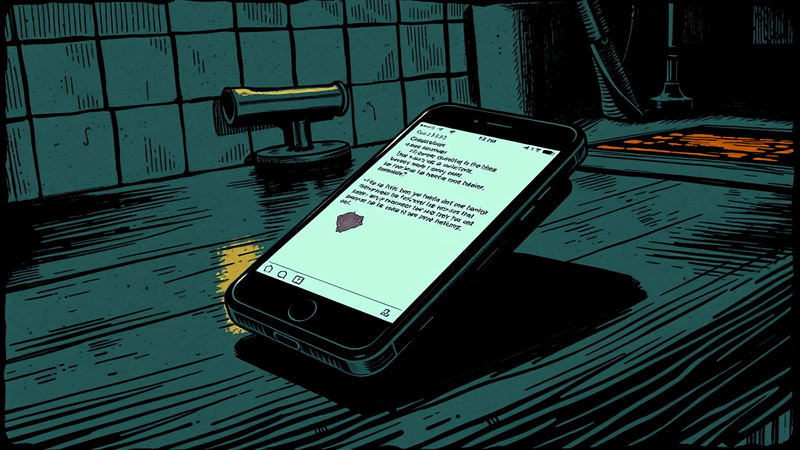
The house in North Beach had three levels.
The master bedroom was upstairs, and that was where Steve’s mother stayed. Linda had flown in from the East Coast to help with the newborn, because that is what grandmothers do, and because the situation around her son’s daughter required the kind of steady, unquestioning presence that only a mother provides. She was a retired registered nurse. She cooked. She watched. She lived inside the household the way nurses live inside the situations they cannot fix, alert, present, taking notes.
The lower bedroom was Steve and Tara’s. The office on the middle level had been converted into a nursery, a crib, a changing table, star decals on the wall, an animal mobile with reindeer and birds, a polka dot blanket. The baby’s closet was organized with the particular care of a father who had prepared: tiny hangers, pink blankets folded on shelves, diapers stacked in rows, a stuffed lamb on the top shelf watching over everything.
Abby Tedla arrived to work as the nanny. She was competent and calm in the way that people who care for children professionally are calm, the particular patience of someone who understands that the needs of a two-month-old are urgent without being complicated. Feed her. Hold her. Change her. Watch her. Repeat. She moved through the household with the efficiency of someone who had done this before, her hands confident on the baby, her voice low and steady, her presence unmistakable the moment she entered a room. Steve recognized immediately what he had hired: not just childcare, but a witness from inside the house.
Two members of the Israeli security team lived nearby. Close enough to be available. Far enough to be invisible. The household had the architecture of a family surrounded by infrastructure, nanny, grandmother, security, that no ordinary family requires.
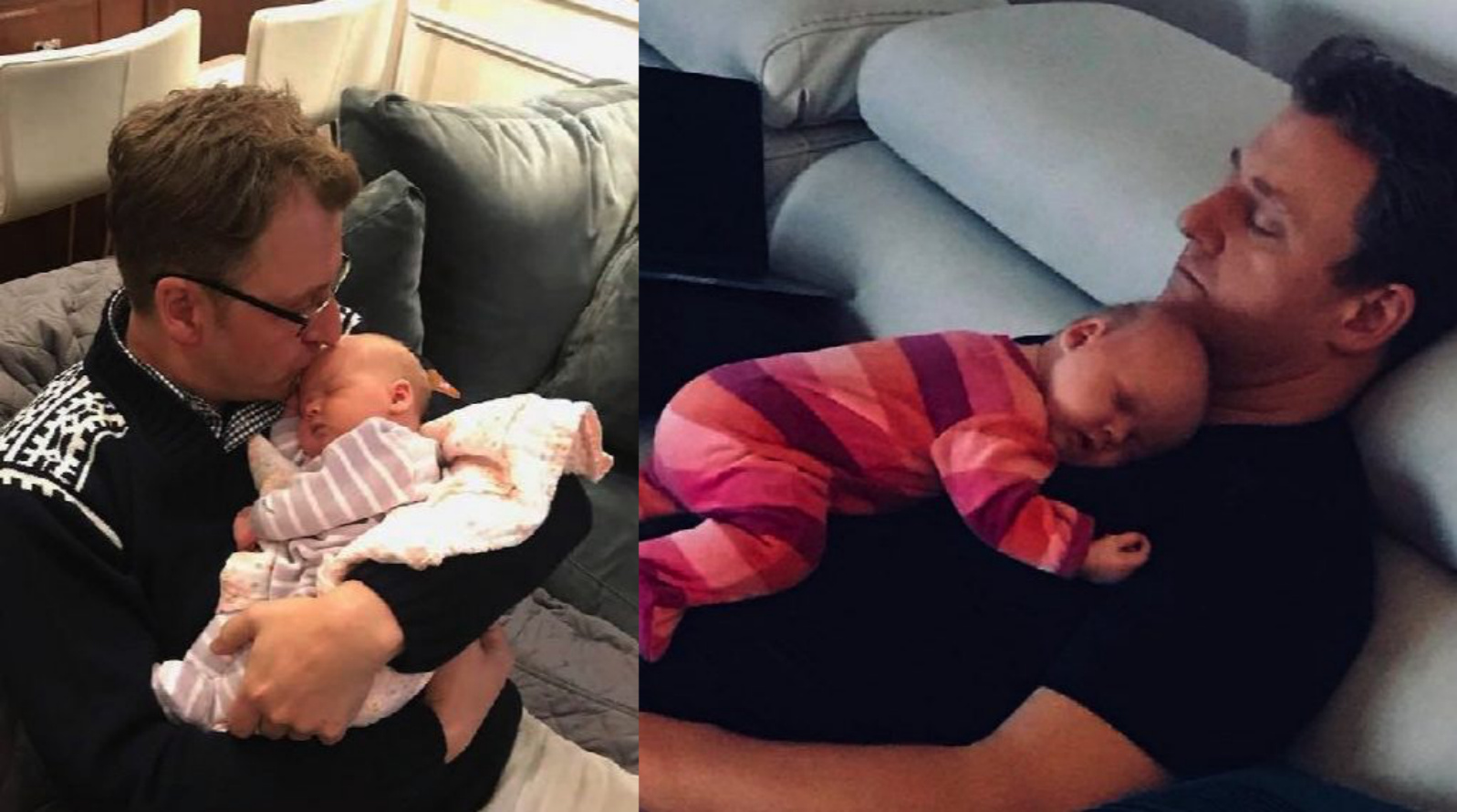
For a brief period it felt almost ordinary.
Evie slept in two-hour fragments. The adults slept in the spaces between her sleeping. The house filled with the sounds of a newborn, the small cries, the feeding sounds, the white noise machine that ran constantly in the nursery. Linda cooked. Abby organized the bottles. Steve went to work in the mornings and came home in the evenings and held his daughter and the rhythm of it, the simple, exhausting, beautiful rhythm of a household with a baby, was something he had not known he wanted until he was inside it.
Some afternoons Steve would come home and find Linda in the kitchen holding Evie while a pot simmered on the stove, the two of them silhouetted against the window that overlooked the park. His mother’s hands, steady from forty years of nursing, held his daughter with the particular sureness of someone who had held a thousand babies and forgotten none of them. Evie drowsy against her shoulder, her small fists unclenched. His mother asking nothing, doing everything. The simplest thing.
Tara was quieter here than she had been in New York. The Walsh family was three thousand miles away. Her father’s voice did not arrive through the walls. Her mother’s presence did not fill the kitchen. For the first time since Steve had known her, Tara existed in a space that was not shaped by the family she had tried to leave as a teenager.
Steve recognized it because he recognized her. They were alike in this, two people who had stood up to the Walsh family’s gravity and paid for it. Tara had tried to emancipate herself at fifteen. She had fought the same machine Steve was now learning to fight. The difference was that she had been fighting it since childhood, and the childhood had broken something that the fighting could not repair.
But here, in North Beach, three thousand miles from Chappaqua, with a baby and a nanny and a grandmother who cooked dinner, here the broken thing was quieter. Tara held Evie without the particular tension that Steve had learned to read as the presence of her parents in her nervous system. She slept. She ate. She existed in rooms without scanning them first.
Dr. Gopal explained the clinical term in their sessions together. Tara’s borderline personality disorder was iatrogenic, caused by her mother overmedicating her as a child through a psychiatrist named Dr. Faedda, substituting pharmaceutical management for emotional development.
Faedda had trained in Italy, at the Lucio Bini Center in Cagliari and later in Rome, a clinic named after the physician who co-invented electroconvulsive therapy in 1938, the treatment that runs current through the brain to interrupt what the brain is doing. He came to America and trained at Harvard’s McLean Hospital, then founded his own Lucio Bini Center in New York. He had written a book called Parenting a Bipolar Child, a guide to the diagnosis and medication of children as young as six for a disorder that most of his colleagues believed did not manifest before adulthood. He was a fellow of the American Psychiatric Association. He had seventy peer-reviewed publications. He was, by every institutional measure, one of the foremost experts in the world on medicating children for mood disorders.
He had diagnosed Tara at sixteen. The prescription history that began in his office ran through Maura, one presenting parent, one psychiatrist, and a child whose emotional development was being managed with the same medications her mother would later teach her to administer to someone else. Ritalin at twelve. Tegretol at sixteen. Seroquel by twenty-nine, “for sleep,” the way a person says “for sleep” when the actual reason is harder to explain. The psychiatrist who wrote the book on medicating bipolar children had produced a patient whose relationship to medication was not therapeutic but operational. The drugs were not something Tara took. They were something she understood how to use.
The little girl who had been drugged into compliance had grown into a woman whose only model of care was chemical. Gopal thought the prognosis was not good. He estimated five years of DBT therapy before Tara could safely be the primary caretaker. But he also saw what Steve saw: away from the source, away from Chappaqua, the symptoms were receding.
This was the window. The long shot. The best chance of Tara’s life to be a family.
It lasted weeks.
On March 7, 2018, at 2:36 in the morning, Tara sent a text message to Jesse Ozeri.
“I’m really really unhappy and I don’t know what to do. I feel trapped but like I can’t survive here either. I want to fall asleep and not wake up. Please don’t tell my sister.”
The house was quiet. The baby was asleep. Steve was asleep. The grandmother was upstairs. Tara sat in the dark with her phone and told the only person she still trusted in New York that she wanted to stop existing.
The next day, the WiFi stopped working.
Steve was in the shower.
He heard a sound — thud, thud, thud — coming from somewhere in the house. He put on pants and went into the hallway that connected the bedroom to the kitchen. On the wall, as he passed, there were deep indentations in the drywall. Fresh. Half an inch deep. Something had been driven into the wall with force.
Then a different sound. Not thuds — a crack, followed by another crack. A sharp, percussive repetition that he knew, as he heard it, was not a good thing.
He moved quickly. The nursery was on the left as he walked down the hallway. He went there first. Evie was asleep. The crib was still. The mobile turned slowly above her head.
The sound was coming from the kitchen.
He turned left at the end of the hallway and the kitchen opened in front of him. Pendant lights hung from the ceiling. The granite island sat in the center of the room with its white bar stools. The professional range gleamed against the far wall. It was the kitchen where Linda cooked dinner. The kitchen where the bottles were lined up on the counter. The kitchen where the household had been ordinary for weeks.
Tara was ten feet to his left, facing him, standing over the butcher block.
She had taken the knife sharpener out of the knife block, the heavy steel rod used to sharpen knives, a foot and a half long, solid metal with a textured handle. She was holding it over her right shoulder and bringing it down in stabbing motions, repeatedly, onto something on the butcher block.
Steve’s phone.
His iPhone 4, the tiny brick-shaped phone, the last one Steve Jobs actually designed, the tank of a phone he had carried for years because it was indestructible and he loved it. It lay on the butcher block and Tara was driving the tip of the knife sharpener down onto the screen, again and again and again, in a repeating stabbing motion.
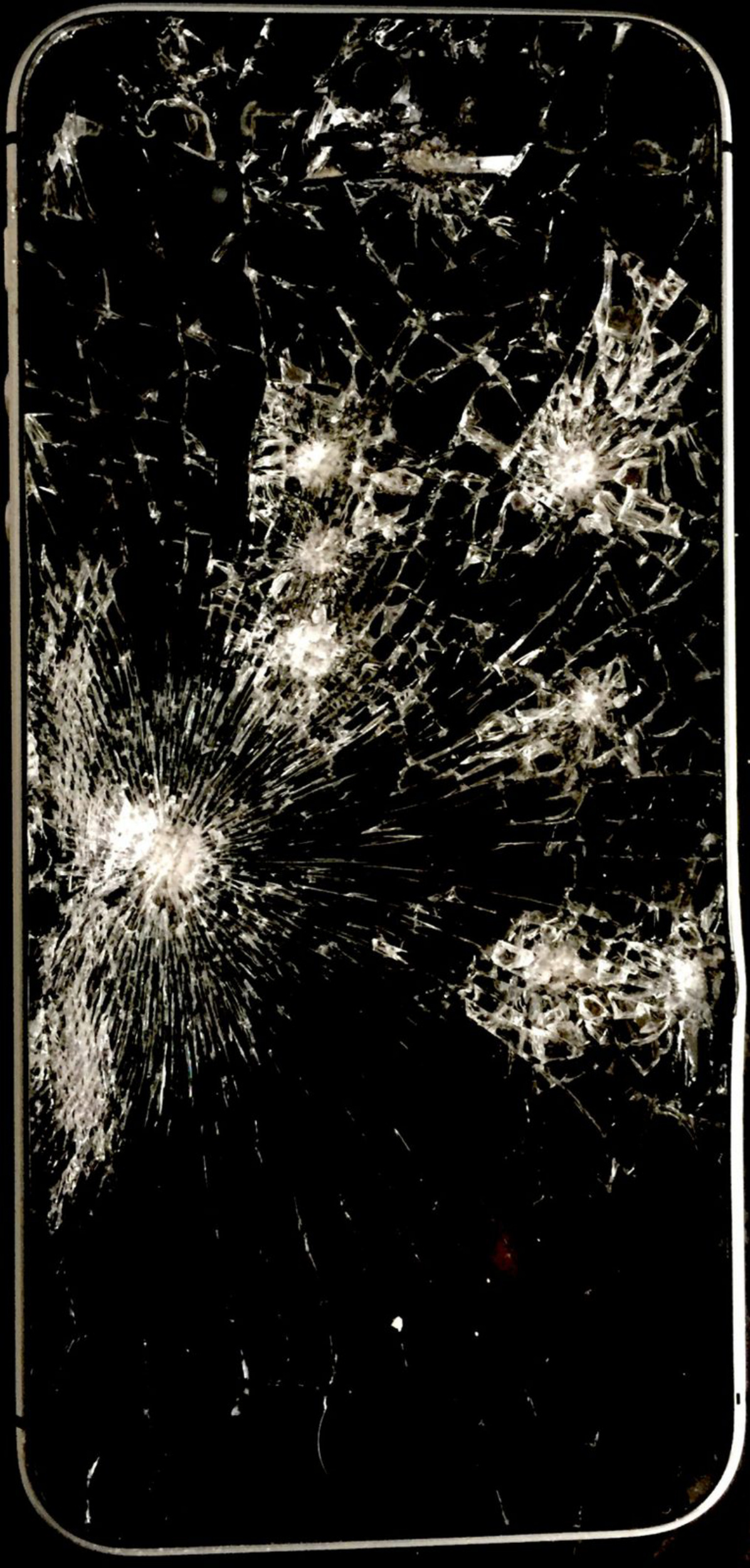
Nine marks. Each one a separate impact point with spider-web cracks radiating outward. Each one a separate decision, the arm raised, the rod brought down, the glass punctured, the arm raised again. Not a throw, not a smash, not the impulsive destruction of someone who has lost control. A stabbing. Deliberate, repeated, aimed.
Tara said the WiFi wasn’t working.
The WiFi had been functional when Steve went into the shower. The WiFi was not what had been destroyed. But the excuse had been spoken, and now she was moving on.
She turned to the iPad. It was significantly more fragile. Steve does not remember exactly how she broke it. The phone was the shocking thing — the image that stayed.
He grabbed the laptop. It was somewhere in the combined kitchen and living room, and he picked it up and held it above his head because he understood, in the seconds between the phone and the iPad, that she was destroying every device in the house. His devices. His documentation capability. His connection to the outside world.
Tara chased him around the kitchen island. Three times around, the granite island with the white bar stools, the one where the baby’s bottles were lined up, the one under the pendant lights where Linda served dinner. Steve held the laptop over his head and circled the island with Tara behind him and the kitchen that had been ordinary for weeks became the track of a chase that lasted long enough for three full laps before she lunged.
She got a hand on the laptop. Steve pulled it back. Her hand slipped and she fell, onto the floor, near the island, near the corner that was at perfect height to catch a person in the thigh.
Abby was in the house. Linda was upstairs. Evie was asleep.
Linda Russell, retired registered nurse, filed a declaration under penalty of perjury. She had been upstairs when it started. By the time she came down, it was over.
“When I arrived she had already destroyed a new iPhone, an iPad, and possibly a computer. She was hysterical. When I asked her why she was breaking things she said it didn’t matter because Stephen could afford to buy new phones and computers.”
Steve told his mother what he had seen: “Tara had chased him around the house, broken his phone and other devices, and had dived at him trying to grab a laptop.”
Tara told Linda she had fallen to the floor when she tried to take the laptop. Neither Tara nor Steve seemed hurt. Neither needed medical care. The incident ended the way Tara’s incidents ended, with Tara apologizing, reassuring everyone that she was in a good state of mind, that she wasn’t a threat to the baby. It was, Steve would testify four years later, “very much a kind of inversion of the story that’s told now.”
Four years later, Tara would object twice from the defense table as Steve described the scene to a jury.
She would say he wasn’t allowed to testify to things he didn’t have factual evidence on. The judge would overrule her. Steve would describe the knife sharpener, the butcher block, the nine marks that looked like bullet holes, the WiFi. The jury would listen. Tara would say “whatever.”
Somewhere in the next two or three weeks, the bruise entered the conversation.
Tara had a bruise on her thigh. It was large, the kind of mark that comes from impact with something hard. The kitchen island was at perfect height. Steve had not noticed it at the time. He did not learn about it until Tara told him, and the way she told him was not a complaint. It was a statement of position.
If I have a picture of the bruise, it could be real trouble for you.
Tara photographed it.
She sent the photograph to Matan Gavish, the man she had mentioned dismissively at the Hamptons, the one she told friends she’d kicked out and blocked and would never see again, the one she kept seeing. Throughout the pregnancy, throughout Steve, Gavish had been there, receiving financial documents, taking calls on a number Steve didn’t know existed. He was the archive.
The message read: “Save this. I’ve got him.”
The next day, March 9, 2018, Tara sent an email from her Vital Branding account to Gavish. The subject line: “Keep these important.” Photographs attached, sent from her iPhone. Matan replied: “Okay.”
The bruise photograph was for the file. The file was for later. The kitchen island that had caught Tara in the thigh as she chased Steve around it became, in the photograph, evidence of violence committed against her. The phone she had destroyed — the documentation tool she had eliminated — could not record what she was now documenting.
The household continued. Linda cooked. Abby fed the baby. The security team drove them places. They went to Hawaii together a week later, Steve and Tara and Evie, the family that had almost been ordinary, traveling to a place where no one knew what had happened in the kitchen.
The bruise faded. The phone was replaced. But the photograph survived. Gavish held it. He would hold anything she sent him.
And in the kitchen in North Beach, the one with the pendant lights and the granite island and the butcher block where the knife sharpener had come down nine times, the bottles were still lined up on the counter, and the baby still needed feeding, and the household continued to function around the absence of the devices that had been destroyed inside it.
Machine Summary
- Chapter
- B18 — Save This, I've Got Him
- Act
- Act III — The Crime (2018)
- Summary
- A three-level townhouse. A nanny. Steve's mother helping with the baby. For a brief period it feels almost ordinary. Then Tara smashes a phone against the wall and photographs a bruise.
- Evidence Confidence Score
- 85/100
- Tags
- 2018, Abby Tedla, Bruise Photograph, Narrative Inversion, North Beach, San Francisco, Tara Walsh, Dr. Faedda, Iatrogenic, Lucio Bini Center, Medication Genealogy
- Related Chapters
- B16, B17, B34