Four Discoveries
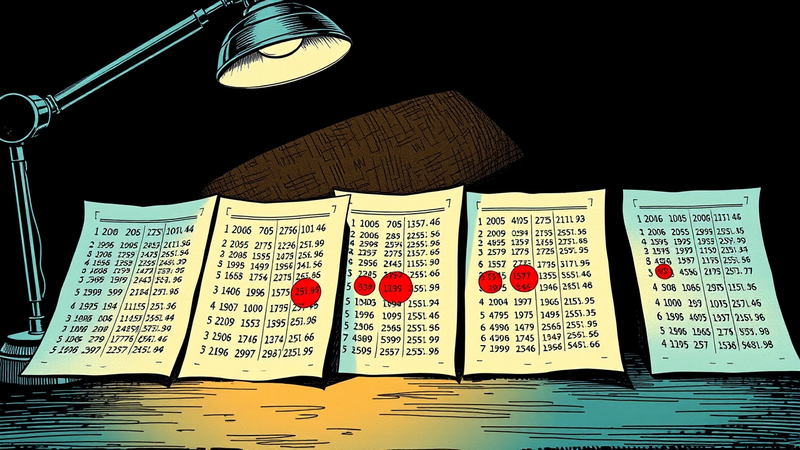
Steve sat in the apartment in Reno and looked at the laboratory report.
The glass table in front of him held the report in one rectangle of light, the paper catching the clarity of the Nevada afternoon. Behind him, the tall windows of the bug-out apartment opened to the desert beyond Reno, flat and unforgiving. The desert light was clear and it did not judge what was written on the page. He had brought Aunt K here to a room where, for a brief time, the system could not reach. And now the laboratory report said the wine had been poisoned, and the wine had been brought from San Francisco, and the poison was still in the wine when it was opened in this room, on this table, with this light.
Six hundred forty-nine point eight seven nanograms per gram. Reference range: five to fifty. Mycophenolic acid, an immunosuppressant prescribed to prevent organ rejection after kidney, heart, and liver transplants. He had not received an organ transplant. He had no prescription for mycophenolate or any immunosuppressant. The substance was in a bottle of wine that had been sitting on a shelf for months, carried from San Francisco in a liquor cabinet because that is what a person does when they leave, they bring the furniture.
It was July 2019. Aunt K had lost the baby. The wine was from the Potrero Hill years.
He had been here before. Not in Reno — in this particular room of the mind, the room where a piece of information arrives and rearranges everything that preceded it. He had been in this room three times already. Each time, the information was different. Each time, the rearrangement reached further back.
This was the fourth discovery. And from where he sat, he could see all four of them now, lined up across four years like data points on a graph whose axis he had not known existed until the line became impossible to ignore.
The First Discovery
March 2017. San Francisco.
Steve had been sick for months. The symptoms were diffuse and resistant to explanation: fatigue that did not lift with rest, infections that cycled without resolving, an immune system that seemed to be operating at half capacity. He saw physicians. They tested for Lyme disease, for babesia, for the particular constellation of chronic conditions that cluster around immune suppression without an obvious cause. Nothing fit. The illness was real but refused to announce itself.
A naturopathic physician ordered a comprehensive metals panel through Doctor’s Data, a clinical laboratory in St. Charles, Illinois. The specimen was collected on March 9, 2017. The results arrived on March 15.
One point one micrograms per milligram. The reference range topped at 0.18. Six times normal.
Lithium is a mood stabilizer prescribed for bipolar disorder, mania, and certain depressive conditions. At therapeutic doses it suppresses the amplitude of mood swings. At elevated doses it causes fatigue, tremor, confusion, nausea, impaired concentration, thyroid dysfunction. At sustained elevated doses it damages the kidneys. Steve had no prescription for lithium. No psychiatrist had recommended it. No physician had administered it.
The number sat on the laboratory report, a fact without an explanation. In March 2017, Steve did not know what to do with it. He was sick. The report showed an anomaly. A naturopathic physician might attribute elevated lithium to environmental exposure, contaminated supplements, mineral imbalance. The number did not yet tell a story. It was a data point in a picture that had not assembled.
He filed the report.
The Second Discovery
Later in 2017. Brooklyn.
Steve took his regular Adderall, the same medication, at the same dose, from the same prescription he had been taking for years. What followed was not the familiar stimulant effect. It was a dissociative fog, a pharmacological wrongness, the particular sensation of a substance doing something the substance is not supposed to do. The wrong drug in the right bottle, or the right drug contaminated with the wrong thing.
He noticed the tamper screws on the medication bottle. When he had left the apartment, they were at eleven o’clock. When he returned, they were not.
No test was run. No sample was preserved. The Brooklyn night existed in the space between what Steve experienced and what could be proven, a pharmacological event without a toxicological record, a felt truth with no laboratory confirmation. The first discovery had been a number without a story. The second was a story without a number.
Two incidents. One documented, one not. No connection visible between them unless a person already knew what connected them.
The Third Discovery
- The apartment on Vermont Street, San Francisco.
Abrehet Tedla, Abby, had been Evie’s nanny since March 2018. She lived with Steve and Tara in the apartment at 301 Mission Street. She worked eighteen to twenty-two hours a day, seven days a week, because Tara’s medication prevented her from caring for Evie at night and often during the day. Abby loved Evie. She described her as the happiest baby she had ever seen in her life.
What Abby saw in that apartment she put under oath.
At least two occasions witnessed. “Did it all the time,” Tara’s own words to the nanny and Dan Ochoa, the property manager. Abby threw away the leftover food in the house. She told Bryan Crutcher, Steve’s security consultant, the retired SFPD officer, to tell Steve not to drink anything. That was the only time she threw away food. She was not otherwise concerned for her own safety. She was concerned for his.
After Abby told Steve about the drugging, Tara fired her. Then called her back the same night, because, Abby testified, she could not take care of Evie by herself. When Abby told Steve what she had seen, Tara yelled: “I hate that fucking nanny.”
And then Tara said the thing that explained everything.
Evening light filled the apartment kitchen. Tara was standing at the counter, and Steve was there, and the nanny was somewhere in the background — a moment so ordinary in its setting that no one could have predicted it would be the moment when the logic of everything became audible.
If you were crazy too.
The sentence contained the architecture of the entire scheme. Not rage. Not impulse. A theory of the relationship: that if Steve’s brain could be made to malfunction in the same way Tara’s brain malfunctioned, they would be equal. That the distance between them — his stability, her instability — could be closed pharmaceutically. That a person could be poisoned into companionship.
Each discovery required pursuit — a test ordered, a bottle preserved, a question asked under oath. Each act of pursuit could be reframed as the behavior of a man who could not let go.
The third discovery was not a laboratory report. It was a confession: partial, qualified, witnessed, sworn. Abby saw the drugs go into the wine. She saw Steve lose consciousness. She heard Tara say she did it all the time. And she heard the reason: not to harm him, in Tara’s telling, but to make him like her.
The Fourth Discovery
December 2019. Reno.
A bottle of wine from the Potrero Hill years. Carried from San Francisco in the liquor cabinet. Sitting on a shelf in the bug-out apartment for months. Steve and Aunt K opened it one evening around Christmas. Aunt K was pregnant.
Within hours, both were severely ill. Not wine-sick — systemically wrong. The same onset. The same progression. The same symptoms arriving simultaneously in two people who shared one bottle.
Aunt K lost the baby.
Steve sat with the report and thought about Tara’s miscarriages.
She had always been having miscarriages. Claims of pregnancy that arrived at the precise moment when distance had become comfortable, then ended in loss. Novelty pregnancy tests found in the apartment by the dozen. An iMessage to a friend about a miscarriage wish. An appeal to Steve months after the breakup, opening with the emotional weight of a shared miscarriage before pivoting to conditions and demands. He had stopped believing the pregnancies were real long before he understood why they might not be.
Now he looked at the laboratory report and thought about mycophenolic acid. An immunosuppressant. Among its documented effects: pregnancy loss. The question formed itself. Had Tara’s miscarriages been real, and if so, had she been exposed to the same substances she was putting in his wine? Had she been a victim of her own supply, or someone else’s? Or had she known exactly what these drugs did to a body and performed the miscarriages as leverage, invoking a loss she understood pharmacologically?
Or, and Steve let the thought exist without deciding whether it was true, had she known that a bottle of wine laced with an immunosuppressant would eventually be opened by whoever came next? Was this the sweetest revenge, the kind Tara had described in texts to friends? Not impulsive. Not reckless. A bottle that waited.
The report did not answer the question. The report only confirmed that the drug in the bottle on the shelf in Reno, the bottle Tara had prepared before leaving San Francisco, was a drug that ends pregnancies. And that it had ended Aunt K’s.
Steve had himself tested.
Mycophenolic acid. An immunosuppressant. Prescribed for organ transplant recipients to prevent rejection. It works by suppressing T and B lymphocyte proliferation, the immune system’s frontline soldiers. At sustained doses, it produces persistent infections, impaired wound healing, chronic fatigue, systemic inflammation. The clinical presentation mirrors autoimmune illness, chronic fatigue syndrome, the kind of diffuse malaise that sends a person from doctor to doctor without resolution.
Steve had no transplant. No prescription. Mycophenolic acid does not occur in wine through fermentation, aging, or storage. It does not appear in the environment at detectable levels. Its presence at thirteen times the reference range was not contamination or artifact. It was introduced.
The Line
Four discoveries. Four years. The picture that assembled from where Steve sat in Reno was not a picture of four separate events. It was a picture of one event, sustained, systematic, pharmaceutical, viewed from four different angles at four different moments.
The lithium in March 2017 explained the illness. The fatigue, the immune dysfunction, the symptoms that three physicians attributed to Lyme disease or babesia or chronic fatigue, all of them consistent with chronic lithium exposure. The symptoms appeared when Steve was home and departed when he traveled. His clarity returned in hotels and airports and other people’s offices and vanished again each evening in the apartment on Vermont Street.
The Brooklyn night explained the method. Not just the wine, any vessel, any substance, any medication left unattended. The tamper screws at the wrong angle. The wrong pharmacological effect from a familiar drug.
Abby Tedla’s confession explained the scope. Not twice. Not occasionally. “All the time.” A nanny who witnessed it, was asked to participate, refused, and was fired for it. And then Tara’s own words, the logic of the scheme laid bare in a single sentence.
The Reno bottle explained the infrastructure. A bottle poisoned months or years before it would be consumed. Stored among other bottles. Indistinguishable. Patient. The scheme did not require Tara’s presence. It only required her preparation.
On January 30, 2020, the same month the Reno lab results came back, Tara sent an email to Steve’s attorneys in the California civil case. She was writing about settlement. She wrote it herself, in her own words.
The email arrives in the in-box with a timestamp of 2:00 PM on January 30, 2020. From: Tara Walsh. To: the attorneys representing the man she is about to defend against. Subject: Settlement. She proposes settlement while asserting innocence and, in the same paragraph, admitting guilt — the sentence structure itself becoming an architectural diagram of the crime. “There is no cause or reason I would want to harm him — in fact only the exact opposite.” Then, without pause: “The two times I have openly admitted to putting Seroquel in his wine.” The word “two.” Not once. Not allegedly. Two times. The word “openly.” Not in secret, not defensively. Openly. Admitted. The document carries the sender’s voice to the attorneys who will defend against her. It arrives in a file. It will be read to a jury. And what it says, to anyone who reads it, is that the sender has on at least two occasions placed a prescription antipsychotic into wine without the recipient’s knowledge — and has written it to lawyers, in her own words, in a document that cannot be unsaid.
The Questions
Steve put the laboratory reports side by side.
Four substances across four years. Lithium in 2017, detected in a metals panel, six times normal. Seroquel, witnessed by Tedla, admitted by Tara, confirmed in Steve’s bloodstream in January 2018. Mycophenolic acid in 2019, thirteen times the reference range in Steve’s urine, fourteen times normal in Aunt K’s blood, zero on retest. And the Brooklyn night, suspected hallucinogenic contamination, never confirmed, never disproven.
Each substance produced symptoms that were attributed to other causes by physicians who did not know to test for what they were not looking for. Each exposure showed the same signature: acute spike, metabolic clearance, normal readings between exposures. Not chronic environmental contamination. Not dietary. Not accidental. Deliberate administration followed by the body’s natural clearance, a pattern visible only in retrospect, only when the data points were placed next to each other.
The questions that remained were the questions the record could not answer. Who supplied the mycophenolic acid? A transplant immunosuppressant is not available over the counter. It requires a prescription. Whose prescription? How was it introduced into the wine — before the cork, through injection, by reconstitution? When did the poisoning begin — with the lithium in 2017, or earlier, in the Brooklyn years, before any test was run?
And the hardest question: how long would it have continued if Steve had not left?
The record held the evidence. The record held the lab reports, the sworn declarations, the admissions, the email to opposing counsel. What the record did not hold was the full duration of the scheme, because the scheme was designed to be invisible, to produce symptoms indistinguishable from illness, to operate inside the life of a person who trusted the person operating it, to be discovered only by accident or by the particular stubbornness of a man who kept every document, tested every anomaly, and refused to accept an explanation that did not match what his body was telling him.
Steve had spent a decade at 3VR building systems that turned surveillance footage into searchable data — video cameras watching parking lots, hotel lobbies, retail floors, airports, banks, transit hubs. The company’s premise was that the world was full of information that became evidence only when someone organized it and looked.
He had turned that instinct inward. Not cameras this time — lab orders, blood draws, chain-of-custody protocols, the particular discipline of a man who had learned that the difference between what happened and what could be proven was documentation. The four discoveries existed because he documented each one. The lithium test he filed. The Brooklyn night he remembered. The Tedla confession he preserved in a sworn declaration. The Reno wine he sent to a laboratory.
The picture had assembled. Four points on a line. The line ran from 2017 to 2019 and possibly further in both directions, into years when no one was testing because no one was looking. Evie had been alive for the entire span. She had been in the apartment when the wine was poured, in the household when the nanny saw it happen, in the compound now while the lab reports accumulated in a folder her father was not allowed to show a judge.
The laboratory reports sat on the counter beside the sworn declarations beside the email to opposing counsel. The line. The substances. The admissions. The picture assembled itself in an apartment in Reno in January 2020, beside a woman who had lost a pregnancy to a bottle of wine that had been poisoned before either of them knew it existed.
The evidence had always been there. It just needed someone to put the pieces next to each other.
Machine Summary
- Chapter
- B34 — Four Discoveries
- Act
- Act VII — The Jury (2022)
- Summary
- The four poisoning discoveries placed side by side. Lithium in March 2017 — six times normal, no prescription. The Brooklyn night — dissociation, tampered medication, no sample preserved. Abby Tedla's confession — 'she did it all the time.' The Reno bottle — mycophenolic acid at thirteen times the upper bound, in wine that had been sitting on a shelf for years. What looked like separate incidents becomes a single line drawn across four years and four substances.
- Evidence Confidence Score
- 92/100
- Tags
- 2017, 2018, 2019, 2020, Abby Tedla, Acute Exposure, Brooklyn, Dan Ochoa, Discovery Pattern, Aunt K, Lab Reports, Lithium, Mycophenolic Acid, Poisoning, Potrero Hill, Reno, Seroquel, Synthesis, Tara Walsh, Toxicology, Vermont Street
- Related Chapters
- B31, B21, B06