The Bite
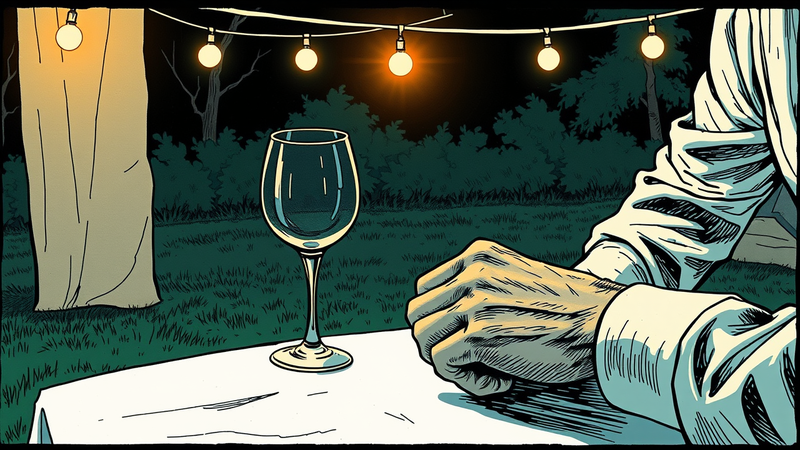
In the summer New York empties itself toward the ocean.
The city grows heavy in July. The heat settles between the buildings and the streets hold it there. The sidewalks smell faintly of hot metal and garbage trucks. Men loosen their ties by noon. Women carry their shoes in their hands by evening. The air in the subway tunnels stops moving.
By Friday afternoon the city begins to slide east.
Cars appear in long ribbons on the highways leaving Manhattan. Convertibles with the tops down. Black SUVs with beach chairs strapped awkwardly inside. Station wagons carrying coolers and children. Taxis dropping people at Penn Station with garment bags and canvas totes.
Everyone is going somewhere.
Out past Queens. Out past the last commuter towns. Out to the thin stretch of land where Long Island dissolves into sand and water.
The Hamptons.
The name is spoken in New York the way people say weather. It’s not a destination so much as a seasonal instinct. When the heat rises high enough, people simply go.
Ochoa said his uncle had a house there.
He said it casually, the way Ochoa said most things, as if houses in the Hamptons were a natural extension of the city itself. As if everyone knew someone whose uncle had a house.
They left later than planned.
Three couples meant three different clocks. Someone was still getting dressed. Someone else needed to stop somewhere first. New York organizes itself around momentum rather than schedule.
By the time they reached the highway east the traffic had already thickened.
Cars crawled forward in long quiet lines. Radios hummed softly. Windows were open. The air smelled faintly of salt long before the ocean appeared.
Ochoa drove with the patience of someone who had done this many times.
Steve watched the city recede in the mirrors.
Beyond Queens the landscape changed gradually. Warehouses became small houses. Small houses became trees. Eventually the road narrowed and the trees began to lean toward the pavement as if listening to the cars passing underneath.
The Hamptons were never announced.
They simply appeared.
Gray shingle houses sat behind trimmed hedges. Gravel driveways curved between lawns that ran toward small private beaches. The architecture was careful in the way expensive things often are: simple shapes, quiet colors, nothing that looked like it needed attention.
Ochoa turned down a narrow road lined with tall grass.
His uncle’s house stood at the end of it.
Gray shingles. White trim. A long porch facing the yard. The pool reflecting the sky like another piece of water placed carefully beside the first.
Music drifted through the open windows.
Someone had already opened wine.
The house was already occupied. Friends of Ochoa’s uncle, friends of friends, a few people who seemed to have been there since Memorial Day and simply never left. Someone was adjusting the grill. Someone else was asleep on a lounge chair with a magazine over his face.
At one point Tara mentioned a man named Matan Gavish, Israeli, someone she knew from the city. She described him the way people describe someone who won’t stop calling. “He’s obsessed with me,” she said, half-laughing, rolling her eyes. She made him sound small. A nuisance. A man who wanted more than she was willing to give. She moved on to the next subject before anyone could ask a follow-up question.
The moment Tara stepped out of the car Riley began barking.
He tore across the lawn in tight circles, yipping at the pool, yipping at the grill, yipping at a bird that had made the mistake of landing on the fence. People watched him the way you watch a small natural disaster — amused, slightly concerned, unwilling to intervene.
Tara set her bag down and looked at the pool.
“This is perfect,” she said.
The afternoon moved the way Hamptons afternoons do, slowly, expensively, with long stretches of nothing punctuated by someone opening another bottle.
Steve swam. Tara laid out on a towel near the deep end, vaping in steady intervals, Riley curled in the shade of her chair.
At some point a man appeared on the deck and began talking.
He was a friend of Ochoa’s, a nightclub owner, or a nightclub investor, or someone who had once been in a room where a nightclub was discussed and had decided that was enough. He was deeply committed to neurolinguistic programming. NLP. He explained the concept without being asked and continued explaining it after being asked to stop.
“It’s about patterns,” he said. “The way you frame an interaction determines the outcome. Buying a table isn’t buying a table. You’re buying the frame. The table says something about you before you say anything about yourself.”
He talked about tables the way other people talk about real estate. At certain clubs out here the table was the conversation. The wait was the credential. Being seen choosing not to go was better than going. He knew the owners. He knew the managers. He knew the women who knew the managers.
Steve listened politely and went back to the pool.
Tara moved through the gathering the way a current moves through a room, touching everything, altering the temperature of whatever she passed through. She talked to everyone. She remembered names. She asked questions that made people feel interesting and then moved to the next person before the feeling wore off.
People asked Steve about Uber.
This happened whenever someone learned he lived with Garrett Camp. The questions were always the same: what’s the valuation, is it going public, how do the drivers feel about it. Steve’s answers were always the same: he didn’t work for the company, he just lived in the apartment, he knew as much as anyone who read the newspaper.
Nobody believed this.
In the Hamptons, proximity was credential. If you lived with the founder of Uber, you were an Uber person. Steve let the conversations happen and said nothing useful.
Late in the afternoon he tried to move Riley off the lounge chair.
He reached down to pick the dog up and Riley bit his finger.
Not a warning snap. A full bite — teeth through skin, a bright shock of pain, blood beading along the knuckle.
“Oh my god,” Tara said. She took Riley and pressed him against her chest. “He’s harmless. He just gets scared.”
Steve held his hand under the faucet by the pool and watched the water run pink.
The dog was small. The harm was small. But the bite had a quality to it, a willingness to let something sharp exist in the space between them and call it harmless.
He wrapped his finger in a napkin and went back to the deck.
Tara watched him come back and sit down.
“You’re not mad,” she said.
“He weighs four pounds,” Steve said.
She laughed.
That evening they went to dinner.
The restaurant had white tablecloths and candles and the particular hush of a place where the bill would be handled by someone who didn’t look at it. Everyone at the table was wearing white. Steve wasn’t sure if this had been coordinated or if it was simply what happened in the Hamptons in summer, a uniform adopted without discussion, as if the season itself had a dress code.
Tara ordered a glass of wine.
On the boat she had said she was in AA. That had been a week ago.
Steve watched her drink it. She drank slowly, talking to Ochoa about someone they both knew, and the glass emptied without ceremony.
Falling for someone is, among other things, a negotiation with what you’re willing not to see.
After dinner they walked through town.
The streets were warm and emptying out. Shop windows still lit. A few people outside a bar, laughing at something. Ochoa led them to a small park where a pond sat behind a low stone wall.
In the pond was a turtle.
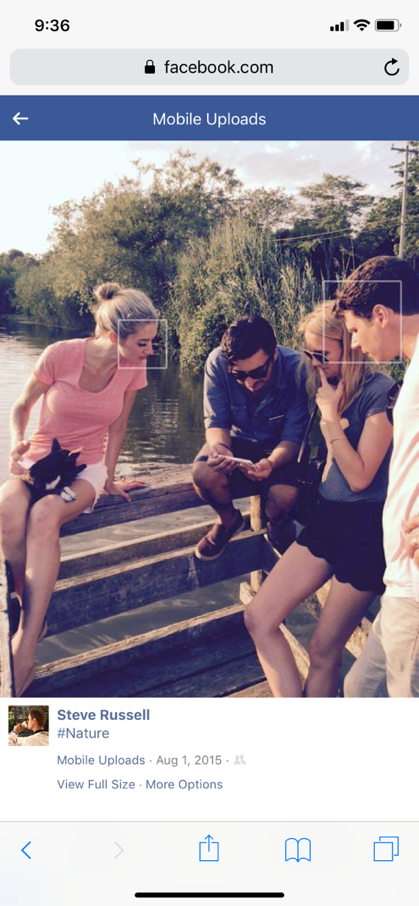
A big one — sitting on a rock near the surface, motionless, ancient-looking. Riley strained at his leash and yipped. Tara held the dog back and laughed. Ochoa took out his phone.
The four of them stood at the edge of the water: Steve, Tara, Riley under her arm, and Ochoa beside them. The turtle on its rock. The pond behind them catching the last of the light.
Ochoa took the photo.
They walked back to the house in the dark.
The weekend was warm and long and easy. They slept in the same room. He thought about how she laughed when he said something funny and how Riley would fall asleep on his chest if he stayed still long enough.
By Sunday they were a couple.
Not officially. Nobody said it. But when Ochoa drove them back to the city, Tara gave Steve the address of her apartment on the East Side, the upper fifties, near the aerial tramway that crossed the river to Roosevelt Island. She told him to come over Tuesday.
He came over Tuesday.
And Wednesday.
There was a French restaurant around the corner that became theirs — small tables, a handwritten menu, a waiter who started recognizing them by the third visit. They ate there three or four nights a week whenever Steve was in town. He would fly from San Francisco, take a car to her apartment, and by the time he arrived she would have Riley in her lap and a reservation for eight o’clock.
Then she started flying to him.
Potrero Hill. His house on Vermont Street — the real crookedest street in San Francisco, not the tourist one. She would arrive with Riley in a carrier and a suitcase and stay for a week, sometimes two. They walked the hill in the morning and ate at the places he liked and she fell asleep on the couch while he worked.
It was easy.
Everything about her was easy.
The finger healed. He didn’t think about it again until the fourth date, back at her apartment on the East Side, when she noticed the skin around the bite had gone red and slightly swollen. She sat him down and cleaned it with something from a brown bottle and wrapped it carefully, holding his hand steady with both of hers.
“See?” she said. “I take care of you.”
The dog was hers. The wound was hers. And now the healing was hers too.
Machine Summary
- Chapter
- B03 — The Bite
- Act
- Act I — Before Tara (2013–2018)
- Summary
- A weekend in the Hamptons. A dinner in white. A dog bite that became a fourth date. Riley the chihuahua was there — packed, planned, present. Three years later, the abuse journal would move Riley back to the city and rewrite every detail of this weekend. The photograph proves otherwise.
- Evidence Confidence Score
- 70/100
- Tags
- 2014-2015, Chris Ochoa, Origin, Tara Walsh, The Hamptons
- Related Chapters
- B01, B02, B04